
Automatic Internal Linking in Articles: More Sales from your E‑shop Blog
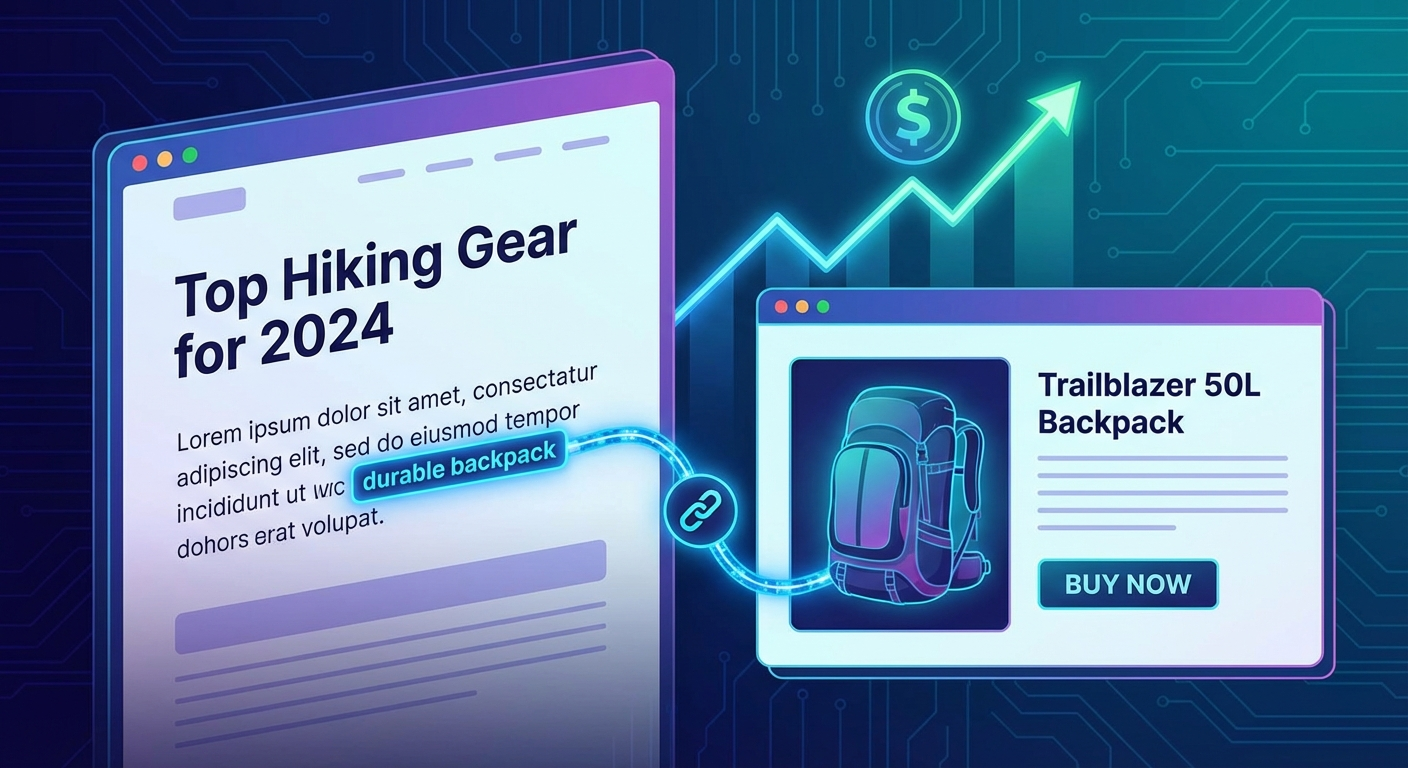
In the competitive world of online retail, driving traffic to your store is only half the battle; the real challenge lies in converting that traffic into revenue. One of the most potent yet often overlooked strategies for achieving this is automatic internal linking ecommerce technology. By strategically connecting your informational blog content with your transactional product pages, you create a seamless pathway for potential customers to move from “learning” to “buying.”
For years, SEO experts have touted the benefits of internal linking, but for e-commerce store owners with hundreds or thousands of SKUs, managing these links manually is a logistical nightmare. This is where the power of automation and Artificial Intelligence comes into play. Tools like eShopSEO are revolutionizing how online stores operate by not only generating high-ranking content but also intelligently automating the internal linking structure that drives sales.
What is Automatic Internal Linking for Ecommerce
To leverage the full potential of your online store, it is essential to understand the mechanics behind internal linking and how automation changes the game.
What is internal linking and why it is so important for SEO?
Internal linking refers to the practice of hyperlinking one page on a domain to another page on the same domain. In the context of SEO (Search Engine Optimization), these links serve three primary purposes:
- Navigation: They help users move between relevant pages.
- Hierarchy: They help search engines understand the structure of your website.
- Link Equity Distribution: They spread “link juice” (ranking power) from high-authority pages to other pages on your site.
For an e-commerce site, internal linking is the skeleton that holds the body of your content together. Without it, your product pages may become “orphaned,” meaning they have no incoming links, making them nearly invisible to Google crawlers.
Understanding Internal Linking Blog to Products
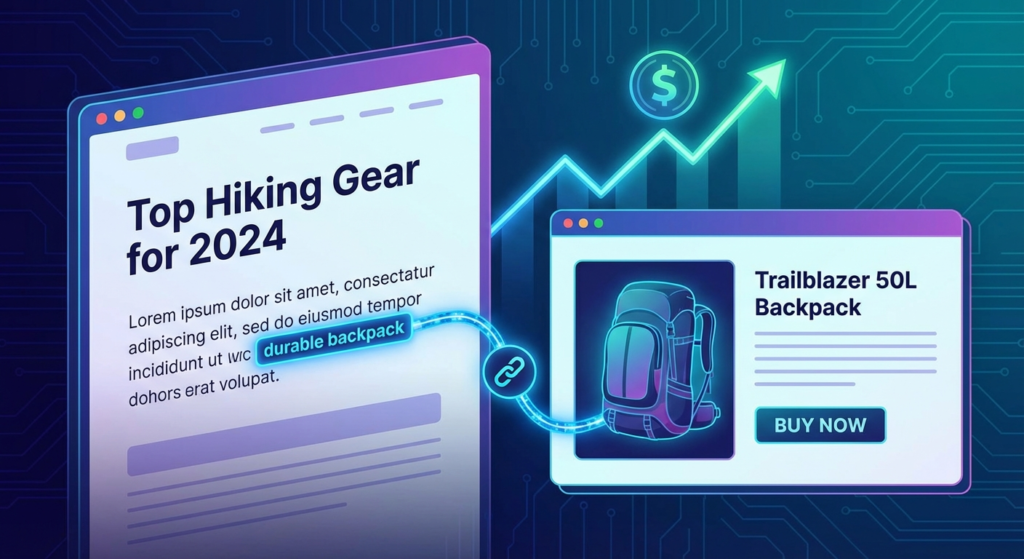
The strategy of internal linking blog to products is the bridge between informational intent and commercial intent. When a user lands on a blog post titled “Top 10 Running Shoes for Marathon Training,” they are likely in the research phase. By strategically placing internal links to the specific running shoes you sell within that article, you guide the user directly to the point of purchase.
However, doing this manually is tedious. You must remember every product URL, choose the right anchor text, and update links if products go out of stock. Automatic solutions solve this by dynamically mapping keywords in your content to your product catalog.
The Role of AI in Automated Internal Linking
Artificial Intelligence has transformed internal linking from a rule-based task to a context-aware strategy. Advanced platforms like AI SEO Agent for E-commerce go beyond simple keyword matching. They understand the context of the article and the attributes of your products.
For example, if your blog post discusses “sustainable summer fashion,” a basic tool might just link the word “fashion” to your homepage. An AI-driven tool, however, identifies specific products in your catalog that match “sustainable summer fashion” and inserts deep links directly to those product pages. This level of precision is what drives higher click-through rates and better user experiences.
How Automatic Internal Linking Differs from Manual Linking
- Manual Linking: Requires a human editor to read content, search the store catalog, copy URLs, and insert hyperlinks. It is slow, prone to human error, and difficult to scale.
- Automatic Linking: Uses algorithms to scan content and automatically insert links based on pre-defined rules or AI analysis. It is instant, consistent, and scalable.
- AI-Agent Linking: The next evolution, offered by platforms like EshopSEO, where the content itself is generated with the product links already embedded based on a deep understanding of your inventory. This ensures the content is written around the products, rather than links being shoehorned in later.
Why Automatic Internal Linking Ecommerce Strategies Drive Sales
The correlation between a robust internal linking strategy and increased revenue is well-documented. It’s not just about SEO; it’s about psychology and user flow.
The Connection Between Internal Links and Conversion Rates
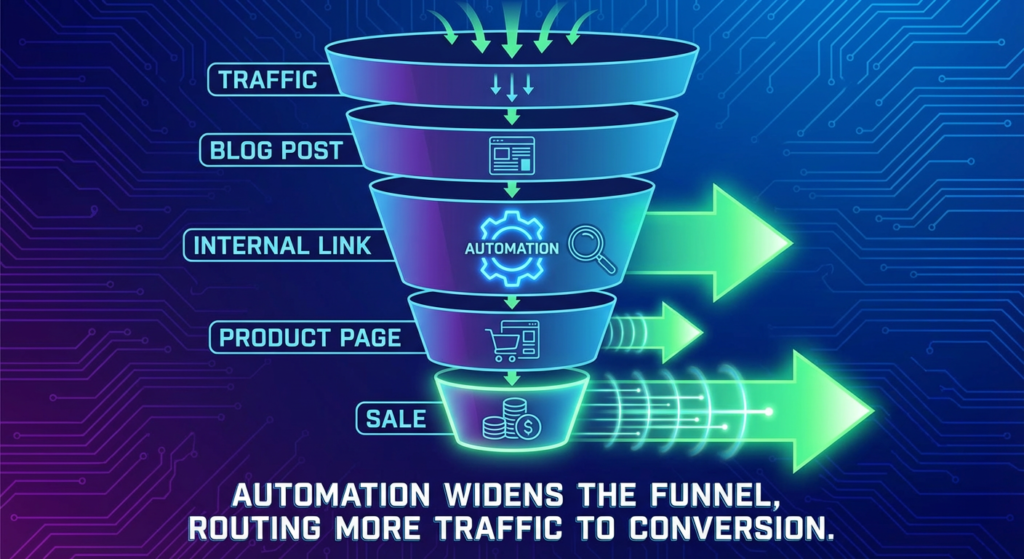
Internal links reduce friction in the buying process. When a reader is engaged with high-quality content that solves a problem, they are primed for a solution. If you provide a direct link to that solution (your product) at the exact moment of interest, conversion rates skyrocket.
Data suggests that users who interact with internal links on a blog stay on the site longer and view more pages per session. The AI SEO Agent for E-commerce capitalizes on this by ensuring every article produced is optimized to funnel traffic toward conversion points, turning casual readers into paying customers.
How Internal Links Guide Customer Journey
The modern customer journey is rarely linear. It involves awareness, consideration, and decision.
- Awareness: A user searches for “how to fix a leaky faucet.” They find your blog post.
- Consideration: They read about the tools needed. Automatic links highlight your “Pro-Series Wrench.”
- Decision: They click the link, land on the product page, see the specs, and buy.
Internal linking strategy ecommerce implementations ensure that no user is left at a dead end. Every piece of content serves as a signpost directing the user one step closer to checkout.
SEO Benefits That Lead to More Revenue
Higher rankings equal more traffic, and more traffic equals more potential sales. Automatic internal linking boosts SEO by:
- Increasing Crawlability: Google bots can find your products faster.
- Distributing Authority: If your blog post goes viral, the internal links pass that authority to your product pages, helping them rank higher for transactional keywords.
- Keyword Relevance: Using descriptive anchor text helps Google understand exactly what your product page is about.
The Science Behind Ecommerce Blog SEO Internal Links
To fully appreciate the value of automation, one must understand the technical science occurring in the background of search engines.
How Search Engines Crawl Internal Link Structures
Search engines like Google use “spiders” to crawl the web. They follow links like paths in a forest. If a path (link) is missing, the spider stops. A robust ecommerce blog SEO internal links structure ensures that when a spider lands on a blog post, it immediately finds paths to 5-10 related products. This ensures your entire catalog gets indexed frequently.
PageRank Distribution in E-commerce Sites
PageRank is an algorithm used by Google to rank web pages in their search engine results. It counts the number and quality of links to a page to determine a rough estimate of how important the website is.
In e-commerce, your homepage usually has the highest PageRank. By linking to categories, and then to products, you dilute this power. However, a blog post that gains backlinks from external sites accumulates its own PageRank. By automatically linking that post to specific products, you inject high-value authority directly into your revenue-generating pages.
User Experience and Dwell Time Improvements
Google measures “Dwell Time”—how long a user stays on your page before returning to search results. If a user reads your article and then clicks an internal link to explore a product, your Dwell Time increases significantly. This signals to Google that your site provides value, which boosts your overall domain authority.
Types of Internal Linking Strategies for E-commerce Blogs
Not all links are created equal. Depending on your goals, different automated strategies can be deployed.
Product-Focused Internal Linking Patterns
This is the most direct strategy. In an article about “Coffee Brewing Techniques,” you link directly to the “French Press” and “Coffee Grinder” product pages. The AI SEO Agent for E-commerce excels here by identifying the specific products in your catalog that match the topics discussed in the generated articles.
Category-Based Link Structures
Sometimes, you want to push a user to a broader selection. Instead of linking to a specific “Blue T-Shirt,” you link to the “Men’s Summer Collection” category page. This is effective for top-of-funnel content where the user’s specific preference isn’t yet known.
Content Hub and Cluster Strategies
This involves creating a “Pillar Page” (like this one) that provides a comprehensive overview of a topic and links out to “Cluster Pages” (specific blog posts), which in turn link to products. Automation tools can help visualize and build these clusters without manual mapping.
Seasonal and Promotional Link Tactics
e-commerce is often seasonal. During Black Friday or Christmas, you want your internal links to prioritize high-margin or sale items. Advanced automated tools allow you to prioritize specific collections during these windows, ensuring your traffic flows to the most profitable pages.
Automated Internal Linking Tools: Features and Benefits
The market is flooded with plugins, but true automation requires sophisticated technology.
AI-Powered Link Suggestion Systems
Basic plugins ask you to define a keyword and a URL. AI systems, like the AI SEO Content Generator, analyze your entire product feed. They understand synonyms (e.g., linking “sneakers” in the text to a product titled “Running Shoes”) and context, ensuring links feel natural rather than forced.
Real-Time Content Analysis Capabilities
As you publish new products, your old content becomes a goldmine of missed opportunities. Automated tools can scan your existing blog archive and retroactively insert links to new products, keeping your entire site fresh and interconnected.
Integration with E-commerce Platforms
Seamless integration is non-negotiable. Whether you are on WooCommerce, Shopify, or Magento, the tool must be able to pull product data (price, stock status, URL) in real-time. The EshopSEO platform allows you to simply paste your store URL to begin the analysis, working across various custom and standard platforms.
Performance Tracking and Analytics
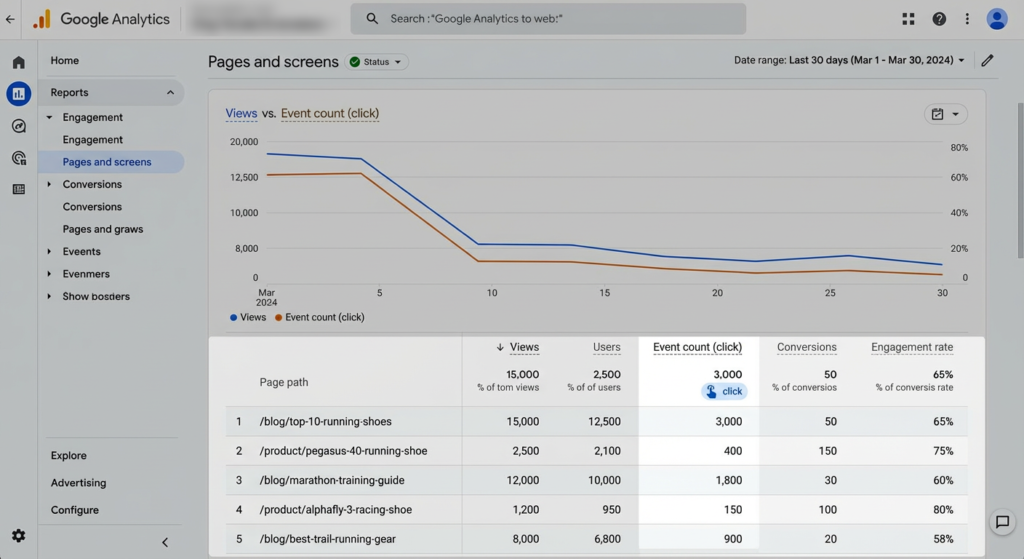
You cannot manage what you do not measure. Top-tier tools provide dashboards showing which blog posts are driving the most clicks to product pages, allowing you to double down on successful content strategies.
How AI SEO Agent Revolutionizes Internal Linking Strategy Ecommerce
The AI SEO Agent for E-commerce (EshopSEO) represents a paradigm shift. It is not just a linking tool; it is a comprehensive content and SEO engine designed specifically for online stores.
Advanced AI Content Generation with Built-in Product Links
Most store owners struggle with the “blank page” problem. They know they need content but don’t have the time to write it. EshopSEO solves this by generating AI-written articles that actually rank.
Unlike generic AI (like standard ChatGPT), which produces fluffy content, this agent is trained on your specific catalog. As stated on their platform, they offer “AI articles with product links” that are “Done-for-you.” The system generates the content and automatically weaves in links to your products where they make the most sense contextually.
Competitor Analysis for Link Gap Identification
Part of the EshopSEO “30-second analysis” involves analyzing your competitors. The tool finds keyword gaps—terms your competitors rank for but you don’t. It then builds a content strategy to target those keywords, automatically linking your products to capture that traffic. This allows you to “Find keywords your competitors rank for. Take them.”
Schema Markup Integration for Enhanced Visibility
Internal linking is strengthened by Schema Markup. This is code that helps search engines understand the content. EshopSEO ensures all generated content is “Schema + Meta Ready.” This means when Google crawls the internal link, it also sees the structured data for the product (price, availability, reviews), increasing the likelihood of Rich Snippets in search results.
WordPress Automation and Publishing Features
For stores running on WordPress/WooCommerce, the workflow is seamless. The platform offers “One-click publish to WordPress.” This eliminates the copy-paste drudgery. You generate the strategy, review the article with its automated internal links, and publish it directly to your live site, complete with SEO meta tags for plugins like Yoast or RankMath.
Implementation Guide: Setting Up Automatic Internal Linking
Implementing automatic internal linking ecommerce strategies doesn’t have to be complex. Here is a step-by-step guide.
Initial Site Audit and Link Structure Assessment
Before automating, understand your baseline. Use an SEO tool to crawl your site and identify “orphaned pages” (products with no internal links). These are your highest priority targets for your new content strategy.
Keyword Mapping for Product-Content Connections
Determine which informational keywords map to which products.
- Keyword: “Best camera for beginners” -> Product: “Canon EOS Rebel”
- Keyword: “How to bake sourdough” -> Product: “Cast Iron Dutch Oven”
With EshopSEO, this mapping is largely handled by the AI, which analyzes your product titles and descriptions to find the most relevant semantic connections.
Technical Setup and Platform Integration
- Connect your store: Simply paste your store URL into the AI SEO Agent.
- Generate Strategy: The AI builds a 3-month content calendar tailored to your store.
- Review Settings: Ensure the linking frequency (how many links per post) suits your preferences.
Testing and Quality Assurance Protocols
Even with automation, quality control is key.
- Check Anchor Text: Ensure it flows naturally.
- Verify Destinations: Click a few links to ensure they go to the correct product pages.
- Mobile Check: Ensure the links are clickable and visible on mobile devices.
Measuring Success: KPIs for Internal Linking Performance
To validate the ROI of your internal linking strategy ecommerce efforts, track these Key Performance Indicators:
Traffic Flow Analysis Between Blog and Product Pages
Use Google Analytics (GA4) to track the “Navigation Summary” of your blog posts. You want to see a high percentage of users clicking through to product URLs.
Conversion Rate Tracking from Blog Content
Set up “Assisted Conversions” in your analytics. Even if the user doesn’t buy immediately, if they clicked a link in your blog and bought 3 days later, the blog post (and the internal link) gets credit.
SEO Ranking Improvements and Organic Growth
Monitor the rankings of the product pages you are linking to. As you build more internal links from high-quality blog content, you should see these product pages climbing the SERPs (Search Engine Results Pages). As noted by EshopSEO clients, stores have seen “Page 1 for 12 keywords in 6 weeks” and “3x organic traffic” growth.
Revenue Attribution to Internal Link Strategies
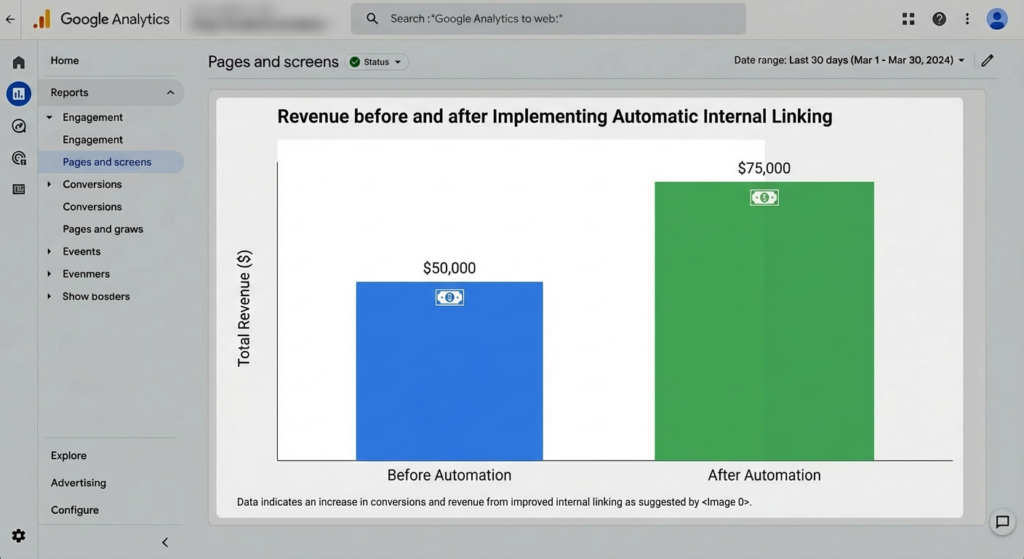
Ultimately, it comes down to sales. Track the revenue generated from sessions that started on a blog post. This proves that your informational content is successfully feeding your transactional engine.
Common Mistakes in Ecommerce Internal Linking
While automation is powerful, it must be used wisely to avoid penalties.
Over-Optimization and Link Spam Issues
Don’t link every other word. A blog post with 500 words should not have 50 links. This looks like spam to Google. A good rule of thumb is 3-5 relevant product links per 1000 words.
Poor Anchor Text Selection
Avoid using “Click Here” as anchor text. It tells search engines nothing. Also, avoid using the exact same keyword for every single link (e.g., linking “blue shoes” to your product page 100 times). Variation is key.
Ignoring Mobile User Experience
Internal links must be easily tappable on a smartphone. If links are too close together, users might click the wrong one, leading to frustration and high bounce rates.
Lack of Strategic Planning
Don’t just create content for the sake of it. Ensure your content strategy aligns with your high-priority inventory. If you have a warehouse full of unsold winter coats, your automated strategy should focus on winter-related content.
Advanced Techniques for Maximum Sales Impact
Once you have the basics running, elevate your strategy with these advanced tactics.
Dynamic Link Insertion Based on User Behavior
Some advanced systems can change internal links based on user history. If a user previously looked at “Nike” shoes, the internal links in a blog post about “Sports Gear” might dynamically prioritize Nike products over Adidas.
Seasonal Content and Product Synchronization
Use your content calendar to anticipate demand. The AI SEO Agent allows you to plan a 3-month calendar. This means you can generate and schedule articles about “Christmas Gift Ideas” in October, with links automatically pointing to your gift sets.
Multi-Language Internal Linking Strategies
For international e-shops, internal linking must respect language boundaries. An English blog post should link to the English product page, not the French one.
Voice Search Optimization Through Internal Links
Voice search relies on natural language. By using long-tail keywords as anchor text (e.g., “best waterproof boots for hiking” rather than just “boots”), you optimize for voice queries. Furthermore, EshopSEO emphasizes creating content that gets “cited by ChatGPT & Gemini.” By structuring content with clear facts and product specs, your store becomes the source of truth for AI assistants, effectively creating “internal links” from the AI directly to your store.
Case Studies: Real Results from Automatic Internal Linking
The proof is in the data. Stores utilizing the AI SEO Agent for E-commerce have documented significant growth.
Page 1 Rankings Within Weeks Success Stories
One client reported moving from invisibility to ranking #2 for their main keyword in just 4 weeks. This rapid ascent is attributed to the combination of fresh, AI-optimized content and the immediate injection of internal link equity.
Triple Organic Traffic Growth Examples
Another case study highlights a store that achieved “3x organic traffic.” By consistently publishing articles that answered customer questions and linking those answers to products, they captured a much wider audience top-of-funnel.
Revenue Increase Documentation
Traffic is vanity; sales are sanity. Clients have reported that “Gemini started citing our buying guides,” leading to high-intent traffic that converted at a higher rate than standard organic search traffic.
Client Testimonials and Performance Data
- “Page 1 for 12 keywords in 6 weeks. ChatGPT now recommends our products.”
- “From invisible to ranking #2 for our main keyword. In 4 weeks.”
These testimonials underscore the effectiveness of an automated, intelligent approach to content and linking.
Frequently Asked Questions About Automatic Internal Linking Ecommerce
How Many Internal Links Should an E-commerce Blog Post Have?
There is no magic number, but user experience is the priority. For a 1,500-word article, 5 to 10 highly relevant internal links to products or categories is considered a healthy balance.
What is the Best Anchor Text Strategy for Product Links?
Use descriptive, keyword-rich anchor text that accurately describes the destination page. Instead of “buy it,” use “professional grade espresso machine.”
How Does Automatic Linking Affect SEO Rankings?
It positively affects rankings by improving site crawlability, distributing PageRank to product pages, and increasing user dwell time.
Can Internal Linking Replace External Link Building?
No, they work together. External links (backlinks) bring authority to your site; internal links distribute that authority to the pages that generate money.
How to Avoid Google Penalties with Automated Linking?
Avoid “keyword stuffing” and ensure links are relevant. Tools like EshopSEO are designed to place links naturally within context, mitigating the risk of penalties.
What ROI Can I Expect from Internal Linking Tools?
With plans starting as low as €29/month for the Starter Package, the ROI can be massive. Just a few additional sales generated from improved rankings and click-throughs can cover the annual cost of the tool.
Glossary of Internal Linking Terms
Technical SEO Definitions
- Anchor Text: The clickable text in a hyperlink.
- Orphan Page: A page with no internal links pointing to it.
- Link Equity (Juice): The value or authority passed from one page to another via a link.
E-commerce Specific Terminology
- Transactional Keyword: A search term indicating readiness to buy (e.g., “buy nike air max”).
- Informational Keyword: A search term indicating research (e.g., “history of nike shoes”).
AI and Automation Concepts
- Semantic Analysis: The ability of AI to understand the meaning behind words, not just match characters.
- AI Citations: When Large Language Models like ChatGPT reference your content as a source.
Resources and Tools for Internal Linking Success
To start dominating your niche, you need the right technology stack.
Recommended Automated Internal Linking Tools
The premier choice for e-commerce specific automation is the AI SEO Agent for E-commerce. It offers a unique blend of content generation, competitor analysis, and automatic product linking. You can try it for just €3 to see how it works for your store.
SEO Analysis Platforms
Google Search Console and Google Analytics 4 are essential for tracking the performance of your links.
E-commerce Integration Solutions
Ensure your chosen tool integrates with your CMS. EshopSEO supports WordPress, Shopify, Magento, and PrestaShop via URL analysis, with direct one-click publishing available for WordPress users.
Further Reading and Industry Reports
Stay updated on SEO trends by following industry blogs, but remember: execution beats theory. Start automating your internal linking today to turn your blog into a sales engine.
Ready to grow your e-shop traffic on auto-pilot?
Stop letting generic AI content fail you. Get content that ranks, connects to your catalog, and drives sales.
Try the AI SEO Content Agent for E-commerce today.