
Why Ecommerce SEO Matters More Than Ever in 2026
Ecommerce is experiencing a fundamental shift. While traditional search engine optimization remains critical, the landscape has evolved dramatically—and most online store owners haven’t caught up.
Here’s the reality: 33% of retail searches happen in Google Shopping, yet this channel often appears 2.5+ scrolls below paid ads and shopping results on desktop. At the same time, answer engines like ChatGPT, Perplexity, and Google Gemini now influence 40%+ of product discovery. Your perfect product ranking #1 for “best running shoes” means nothing if an AI engine chooses your competitor’s product as the top answer.
The challenge is real. Small to mid-size ecommerce stores struggle to compete with Amazon and massive retailers despite often having superior products, better prices, and more authentic customer relationships. They lack the technical infrastructure, content budgets, and brand authority of enterprise competitors.
But here’s the opportunity: Modern ecommerce SEO is no longer about outspending competitors—it’s about outsmarting them.
Search engines in 2026 prioritize E-E-A-T (Experience, Expertise, Authority, Trust) over raw keyword matching. They reward semantic depth over keyword density. They favor AI-readable structured data over traditional on-page optimization. And they increasingly measure actual user behavior and conversion rates as ranking signals.
This comprehensive guide walks you through a proven framework for dominating ecommerce search in 2026, whether you’re selling shoes, skincare, furniture, or digital products. We’ll cover everything from technical foundations to answer engine optimization (AEO), with a clear 90-day implementation roadmap.
What you’ll learn:
- How to build EEAT signals that Google trusts
- Technical SEO fundamentals that actually move rankings
- Content strategy for capturing both search and AI traffic
- How to optimize product and category pages for conversions
- AEO best practices to rank in AI-powered answer engines
- Link-building strategies that work for ecommerce
- A quarterly implementation roadmap to execute systematically
Let’s start.
Part 1: The Foundation – Understanding Modern Ecommerce SEO (2026 Edition)
How Ecommerce SEO Has Changed
If you learned SEO in 2015 or even 2020, you’re working with an outdated playbook.
The ecommerce SEO landscape has evolved in three major ways:
1. From Keywords to Intent and Entities
Old approach: Target “best running shoes” with exact-match keywords throughout your page, stuff headers with the phrase, and rank.
New reality: Google’s BERT, MUM, and modern AI models understand semantic relationships, synonyms, and context. Your page on “men’s trail running shoes” ranks for “best trail running footwear,” “men’s off-road running sneakers,” and dozens of related variations—even without using those exact phrases.
This means: Stop thinking about keywords. Start thinking about topics. Cover a subject comprehensively, use natural language, and let semantic relevance do the work.
2. AI Answer Engines Are Now Your Biggest Competitor
For the first time in search history, your competitors aren’t just websites ranking on Google. They’re AI systems generating answers directly in the search interface.
ChatGPT, Perplexity, Google Gemini, and others now:
- Answer questions without directing users to websites
- Extract product recommendations from multiple sources
- Create buying guides by synthesizing information from competitor sites
- And crucially: Recommend specific products without linking to them
Your rank #1 for “best running shoes for marathon training” doesn’t matter if ChatGPT synthesizes an answer that recommends your competitor’s product without ever mentioning your store.
This means: Your content must be AI-readable, structured, authoritative, and comprehensive.
3. EEAT Determines Everything
Google’s Search Quality Rater Guidelines now explicitly measure:
- Experience: Real user testimonials, authentic reviews, before/after proof
- Expertise: Demonstrated knowledge, certifications, detailed product education
- Authority: Backlinks from trusted sources, media mentions, external citations
- Trust: Security, transparency, responsive service, clear policies
For ecommerce, EEAT signals include:
- Customer reviews and ratings (verified purchases)
- Return/refund policies clearly stated
- Payment security badges
- Customer service responsiveness
- Product specification accuracy
- Author expertise (designer bios, certifications)
- Warranty and guarantee clarity
The three core pillars of modern ecommerce SEO are now:
- Technical Excellence – Fast, mobile-optimized, crawlable, indexed
- Content Authority – Comprehensive, unique, semantically relevant, AI-readable
- User Trust – Authentic reviews, clear policies, security, responsive support
The EEAT Framework for Ecommerce
EEAT isn’t a ranking factor you can “optimize” like keyword density. It’s a quality framework that determines whether Google trusts your site enough to rank it at all.
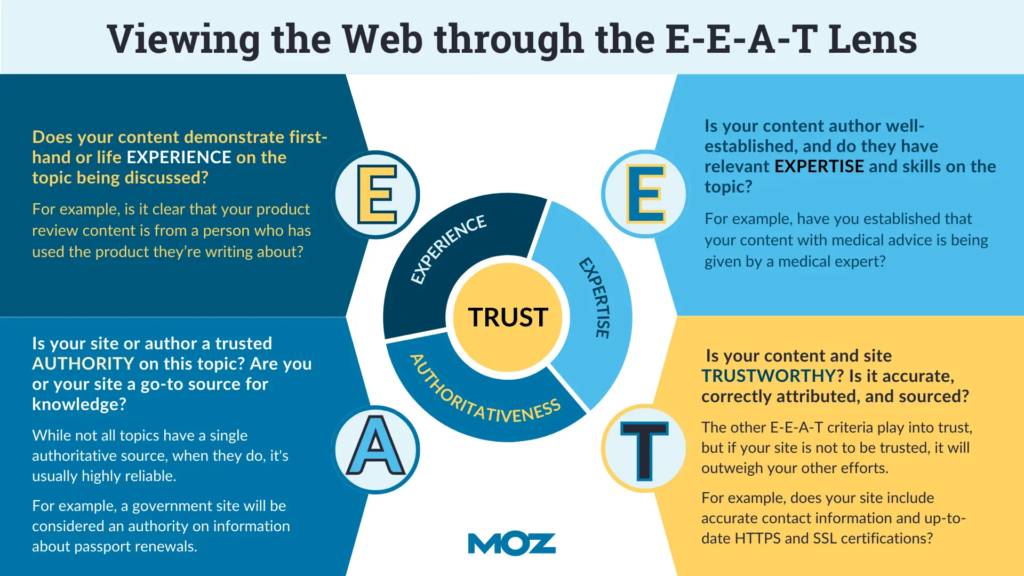
For ecommerce specifically, here’s how to build each pillar:
Experience
Experience signals come from real customer engagement and proof of use.
Actions:
- Collect and display customer review photos and videos (unboxing, product in use)
- Feature testimonials highlighting specific results or transformations
- Show customer-generated content prominently on product pages
- Include “As seen on” logos if featured in media
- Display customer stats (number of happy customers, repeat purchase rate)
Example: Instead of “Great product!” show “Sarah M. – Verified Buyer: ‘I ran three marathons in these shoes without blisters. Highly recommend for long-distance running.’”
Expertise
Expertise signals demonstrate deep knowledge of your products and industry.
Actions:
- Include author bios on product pages, guides, and reviews (credentials, certifications, experience)
- Create detailed buying guides explaining features, materials, benefits
- Publish comparison content showing detailed feature breakdowns
- Include specific product specifications (materials, dimensions, weights, certifications)
- Link to educational content (how to choose, care guides, troubleshooting)
- Partner with or feature industry experts (designers, athletes, specialists)
Example: Instead of generic product descriptions, include “This shoe features a 10mm gel cushioning in the heel, engineered for 5+ hour comfort intervals, based on 5 years of athlete feedback.”
Authority
Authority comes from external recognition and third-party validation.
Actions:
- Earn backlinks from industry publications and niche blogs
- Secure media coverage and press mentions
- Build partnerships with complementary brands
- Earn industry awards and recognition
- Display certifications relevant to your products
- Build a strong brand presence across platforms
- Contribute expert insights to industry conversations
Example: “Featured in Runner’s World Top 10 Running Shoes 2026” shown prominently on product pages.
Trust
Trust is the foundation—without it, nothing else matters.
Actions:
- Display security badges (SSL, PCI compliance, Verisign)
- Show trust signals prominently (verified reviews, return policy, money-back guarantee)
- Transparent pricing with no hidden fees
- Clear, detailed return/refund policies (60-day returns, no-questions-asked)
- Multiple payment options (credit card, PayPal, Apple Pay, Google Pay)
- Fast, transparent shipping (delivery timeframes shown before checkout)
- Responsive customer service (chat, email, phone availability listed)
- HTTPS on all pages (mandatory in 2026)
- Privacy policy and data security clearly explained
Example: Above the “Add to Cart” button: “60-day money-back guarantee | Free returns | 1-3 day delivery | SSL secure | Trusted by 50,000+ customers”
Google’s official ecommerce SEO documentation reinforces these EEAT principles, emphasizing that product page quality, structured data accuracy, and transparent policies are now baseline requirements for competitive ecommerce visibility. For stores looking to scale EEAT-compliant content efficiently, platforms like EshopSEO can automatically generate product-aware blog posts and buying guides that include proper internal linking to products and categories, helping build both expertise signals and topical authority across your domain.
Part 2: Technical SEO – The Non-Negotiable Foundation
Technical SEO determines whether Google can even crawl, index, and trust your site. No matter how great your content, poor technical implementation will destroy rankings.
Core Web Vitals Optimization (2026 Targets)
In 2026, Core Web Vitals are non-negotiable. Google has made it clear: slow sites don’t rank, period. And on ecommerce sites, every 100ms of delay costs money—Amazon proved this decades ago.
Largest Contentful Paint (LCP) – The Loading Speed Kingpin
LCP measures how long it takes for the largest visible content (hero image, product image, main text) to load. Google’s target is ≤2.5 seconds (ideally ≤2.0s for competitive ecommerce).
Why it matters: Pages with LCP >4s have 24% higher bounce rates than pages loading in 1-3 seconds.
Implementation steps:
- Edge Computing Deployment
- Use CDN edge servers (Cloudflare Workers, Vercel Edge, AWS Lambda@Edge) to serve content from locations closest to users
- Pre-render critical pages at the edge
- Move server logic closer to users (latency reduction = faster LCP)
- Multi-Layer Caching Strategy
- Browser cache: 30+ days for static assets
- CDN cache: 1-7 days for dynamic content
- Origin cache: Database query caching, Redis for frequently accessed data
- Edge cache: Cloudflare tiered caching for fastest delivery
- Database Query Optimization
- Index frequently queried columns (product_id, category_id, user_id)
- Connection pooling to reduce connection overhead
- Query optimization: Avoid N+1 queries (select product + separately select reviews)
- Implement lazy loading for secondary content
- Server-Side Rendering (SSR) with Streaming
- Render critical product content on server before sending to browser
- Stream non-critical content (recommendations, related products) after initial load
- Reduces Time to First Byte (TTFB) for product pages
- Image Optimization
- Format: Use WebP for primary images with JPEG fallback
- Size: Optimize to <150KB per image; use responsive sizes (srcset)
- Lazy loading: Defer off-screen images
- Aspect ratio boxes: Prevent layout shifts while images load
- Multiple sizes: Serve different resolutions based on device type
- Third-Party Script Deferral
- Load tracking scripts (Google Analytics, conversion pixels) asynchronously
- Defer font loading (use system fonts for critical content)
- Load chat widgets and widgets after page interactive
- Disable or optimize third-party ads until user interaction
Real-world target for product pages: LCP ≤2.0 seconds on 4G mobile
Cumulative Layout Shift (CLS) – Visual Stability
CLS measures how much visible content shifts during page load. Google’s target is <0.1 (Good). High CLS frustrates users and signals poor technical implementation.
Common ecommerce CLS culprits:
- Product images without fixed dimensions (images load, pushing content down)
- Ads and recommendation blocks inserted dynamically
- Rating widgets loading after initial content
- Cart notifications and toast messages appearing without space reserved
Solutions:
- Reserve space for all dynamic content before it loads
- Use aspect ratio boxes:
aspect-ratio: 3/4for product images - Specify image dimensions in HTML before image loads
- Batch DOM updates to minimize layout recalculations
- Load critical images inline, defer optional images
Interaction to Next Paint (INP) – Responsiveness
INP measures how responsive your site feels to user interactions. Google’s target is <200ms. This matters enormously for ecommerce interactions: clicking “Add to Cart,” browsing product images, applying filters, adjusting quantities.
Optimization:
- Minimize JavaScript execution time (split large bundles)
- Break long tasks into smaller, 50ms chunks
- Use requestIdleCallback for non-critical work
- Optimize event listeners (debounce rapid clicks)
- Prioritize critical user interactions over background analytics
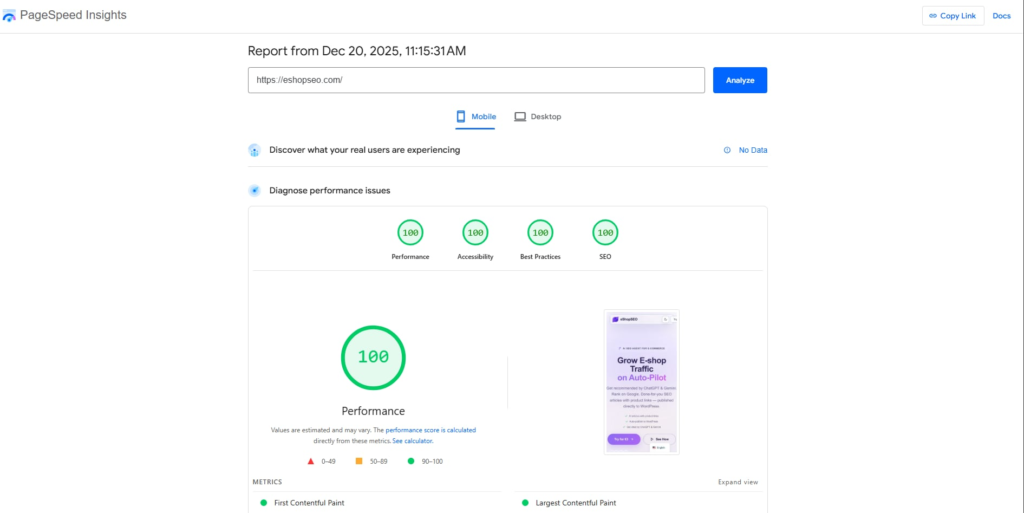
Google provides comprehensive technical guidance through PageSpeed Insights and the Core Web Vitals report in Search Console, which are essential free tools for diagnosing performance issues. For a unified view of how technical issues impact both organic rankings and paid performance, consider using AdCoon.ai’s integrated search intelligence platform to correlate Core Web Vitals data with actual ranking movements and Shopping ad visibility across your product catalog.
Site Architecture & Crawlability
Search engines crawl your site through links. Poor architecture means Google wastes crawl budget on unimportant pages instead of discovering your products.
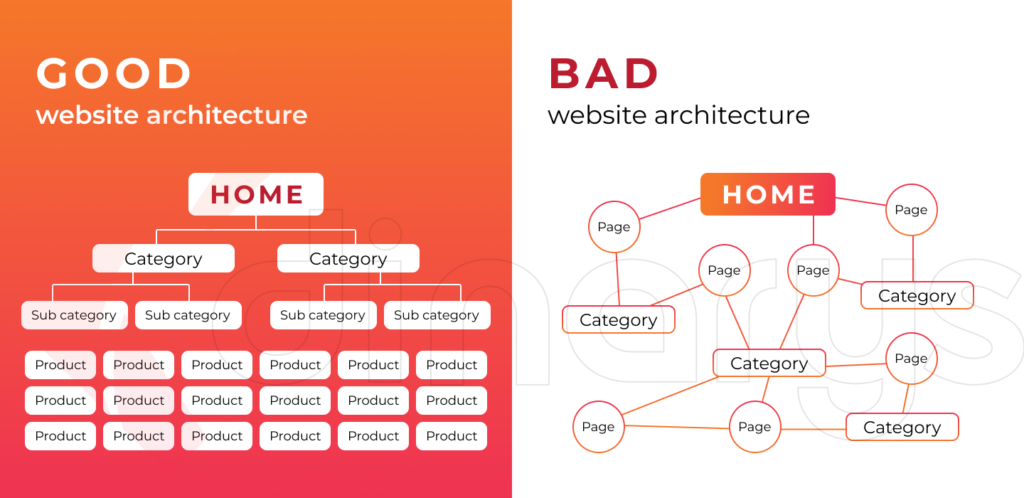
Optimal Pyramid Structure:
Homepage (1 page)
  ↓
Category Pages (10-50 pages) - "Running Shoes," "Winter Boots"
  ↓
Subcategory Pages (50-500 pages) - "Men's Running Shoes," "Women's Trail Boots"
  ↓
Product Pages (1,000-100,000+ pages) - Individual products
No product should be more than 4 clicks from the homepage.
Clean URL Structure:
✅ Good: /running-shoes/mens-asics-gel-kayano-30/
❌ Bad: /product.php?id=12345&category=5&color=black
Descriptive URLs:
- Signal topical relevance to search engines
- Are memorable and shareable
- Help users understand page content before clicking
- Support semantic SEO
URL best practices:
- Use hyphens for word separation (not underscores)
- Lowercase letters only
- Avoid numbers unless necessary
- Keep under 75 characters
- Don’t change URLs once indexed (broken links = lost ranking power)
Crawl Budget Optimization:
Google allocates a “crawl budget” per domain. Larger, more authoritative sites get higher budgets; new sites get less. Waste that budget on low-value pages, and Google won’t crawl your important products.
Optimization:
- Eliminate duplicate content (consolidate with canonicals)
- Set noindex on low-value pages (old seasonal products, filter results, print pages)
- Configure robots.txt to allow CSS, JavaScript, and image files (Google needs these to render)
- Remove or redirect broken links
- Submit XML sitemap with priority hierarchy
XML Sitemap Structure:
Include in your sitemap:
- All category pages (high priority)
- All product pages (medium-high priority)
- Important guides and content (medium priority)
- Rarely-updated pages (low priority)
Update frequency signals:
- Homepage, top categories: daily
- Product pages: weekly (when inventory changes)
- Seasonal content: when relevant
Mobile-First Indexing & Responsive Design
Google has made mobile-first indexing the default since 2021. It crawls the mobile version of your site and ranks based on mobile experience, not desktop.
50%+ of ecommerce traffic is mobile. Your mobile experience isn’t an afterthought—it’s your primary ranking signal.
Mobile Responsive Design Requirements:
- Viewport meta tag:
<meta name="viewport" content="width=device-width, initial-scale=1"> - Flexible layouts that adapt to screen sizes
- Readable font sizes (16px minimum for body text)
- Touch targets minimum 48×48 pixels (fingers are bigger than cursors)
- Simplified navigation with hamburger menus
- Single-column layout (no side-by-side content that requires horizontal scrolling)
Mobile-Specific Ecommerce Optimizations:
- Simplified Checkout
- 1-page or progressive checkout (no 5+ page wizard)
- Guest checkout option (don’t force account creation)
- Autofill enabled (autocomplete=”given-name”, etc.)
- One-tap payments: Apple Pay, Google Pay (40% faster)
- Minimal form fields (collect essentials, skip optional data)
- Product Image Optimization
- Zoom functionality for close product details
- Image carousel: swipe to next image
- Multiple orientations: front, back, side, detail
- 360-degree view (if technically feasible)
- Video: Product demo or unboxing video
- Filter and Sort Usability
- Sticky filter button (stays visible while scrolling)
- Collapsible filter menu (doesn’t take screen space)
- Show number of results per filter
- “Clear filters” option always visible
- Apply filters without page reload (AJAX)
- Load Performance
- Fast checkout process target: Complete in <3 seconds
- Product page load: <2 seconds on 4G
- Search results: <1.5 seconds on 4G
- Image delivery: Multiple sizes based on device (srcset)
Structured Data & Schema Markup
In 2026, structured data is mandatory for visibility. Without schema markup, AI answer engines can’t reliably extract your product information, your rich snippets won’t display, and you’re invisible to the newest search algorithms.
Critical Schema Types for Ecommerce:
1. Product Schema (Required for all product pages)
{
  "@type": "Product",
  "name": "ASICS Gel-Kayano 30 Running Shoe",
  "brand": "ASICS",
  "image": ["url1.jpg", "url2.jpg"],
  "description": "Professional running shoe with gel cushioning",
  "offers": {
    "@type": "Offer",
    "price": "129.99",
    "priceCurrency": "EUR",
    "availability": "InStock"
  },
  "aggregateRating": {
    "ratingValue": "4.8",
    "reviewCount": "2340"
  }
}
Required fields: name, image, offers (price, currency, availability)
High-impact optional: brand, color, material, size
2. Offer Schema (Price and availability)
- Current price (update daily for accuracy)
- Currency (EUR for European sites)
- Availability: InStock, InStockLimitedAvailability, OutOfStock, PreOrder
- Update in real-time to match actual inventory
3. Review & AggregateRating Schema
- Average rating (4.5/5.0)
- Number of reviews (2,340 reviews)
- Individual reviews with author, date, rating, text
4. Breadcrumb Schema (Navigation path)
{
  "@type": "BreadcrumbList",
  "itemListElement": [
    {
      "@type": "ListItem",
      "position": 1,
      "name": "Home",
      "item": "https://example.com/"
    },
    {
      "@type": "ListItem",
      "position": 2,
      "name": "Running Shoes",
      "item": "https://example.com/running-shoes/"
    }
  ]
}
5. FAQ Schema (Question-Answer structured data)
{
  "@type": "FAQPage",
  "mainEntity": [
    {
      "@type": "Question",
      "name": "Are these shoes suitable for marathons?",
      "acceptedAnswer": {
        "@type": "Answer",
        "text": "Yes. These shoes feature gel cushioning designed for 5+ hour comfort intervals. 87% of marathon runners rate these shoes 5 stars."
      }
    }
  ]
}
Always validate your structured data using Google’s Rich Results Test before publishing to production. Google’s official Product structured data documentation provides detailed specifications and examples for all required and recommended fields. For stores managing hundreds or thousands of SKUs, maintaining accurate schema at scale requires either custom development or integration with your ecommerce platform—ensuring that pricing, availability, and review data stay synchronized between your schema markup, visible page content, and Google Merchant Center feeds.
Implementation Best Practices:
- Use JSON-LD format (Google’s preferred method)
- Validate with Google’s Rich Results Test before publishing
- Keep schema aligned with visible page content (no misleading markup)
- Update dynamically (real-time pricing, inventory, reviews)
- For apparel: Include color, size, material, gender attributes
Technical SEO Checklist
Before moving to content optimization, ensure your technical foundation is solid:
- [ ] HTTPS/SSL implemented on all pages
- [ ] robots.txt configured correctly (allow CSS, JS, images)
- [ ] XML sitemap submitted in Google Search Console
- [ ] 404 errors handled gracefully (suggest related products)
- [ ] Canonical tags set up (prevent duplicate content penalties)
- [ ] hreflang tags if serving multiple regions/languages
- [ ] Core Web Vitals: LCP <2.5s, CLS <0.1, INP <200ms
- [ ] Mobile-responsive design tested on multiple devices
- [ ] Product schema implemented on all product pages (JSON-LD)
- [ ] Review schema with ratings displayed
- [ ] Breadcrumb schema on all hierarchy levels
- [ ] Paginated content: rel=”next”/rel=”prev” tags or consolidated canonicals
- [ ] Page speed tested: Google PageSpeed Insights, WebPageTest, Core Web Vitals report
- [ ] Google Search Console set up and monitored
- [ ] Sitemap regularly updated as products added/removed
Part 3: Semantic SEO & Content Strategy – Building Topical Authority
Technical SEO gets your site crawled. But semantic SEO determines whether you actually rank.
The shift from traditional keyword SEO to semantic SEO is the most important change in ecommerce optimization. Understanding this shift determines your success in 2026.
From Keywords to Intent and Entities
Old SEO Approach (2015):
- Research “best running shoes”
- Write article targeting that exact phrase
- Stuff headers with exact keyword: “The Best Running Shoes”
- Stuff body with keyword variations: “best running shoes for,” “best running shoes reviews,” “best running shoes for men”
- Link with anchor text “best running shoes”
- Rank or adjust based on position
Modern Semantic Approach (2024+):
- Understand the topic: “Running Shoes Selection”
- Understand user intent: Buyer wants to choose appropriate shoes by foot type, use case, price
- Create comprehensive content covering all angles:
- Different shoe types (cushioning vs. minimalist vs. trail)
- Customer segments (beginners, marathoners, casual runners)
- Key features (arch support, materials, weight)
- Price ranges and value assessment
- Brand comparisons
- Use natural language, semantic variations, related terms
- Link content showing topical relationships
- Rank for 50+ related queries without targeting each individually
Google’s algorithm now understands:
- Synonyms: “best running footwear” ranks for “best running shoes”
- Related terms: “trail running” ranks for “off-road running”
- Inverse relationships: Content about Nike running shoes ranks for generic “running shoes”
- User intent: “Shoes for women with flat feet” understood as a buying guide, not product review
This means: Stop optimizing individual keywords. Start building topical authority.
Topic Cluster Architecture
Topic clusters organize your content to build authority and help search engines understand your expertise.
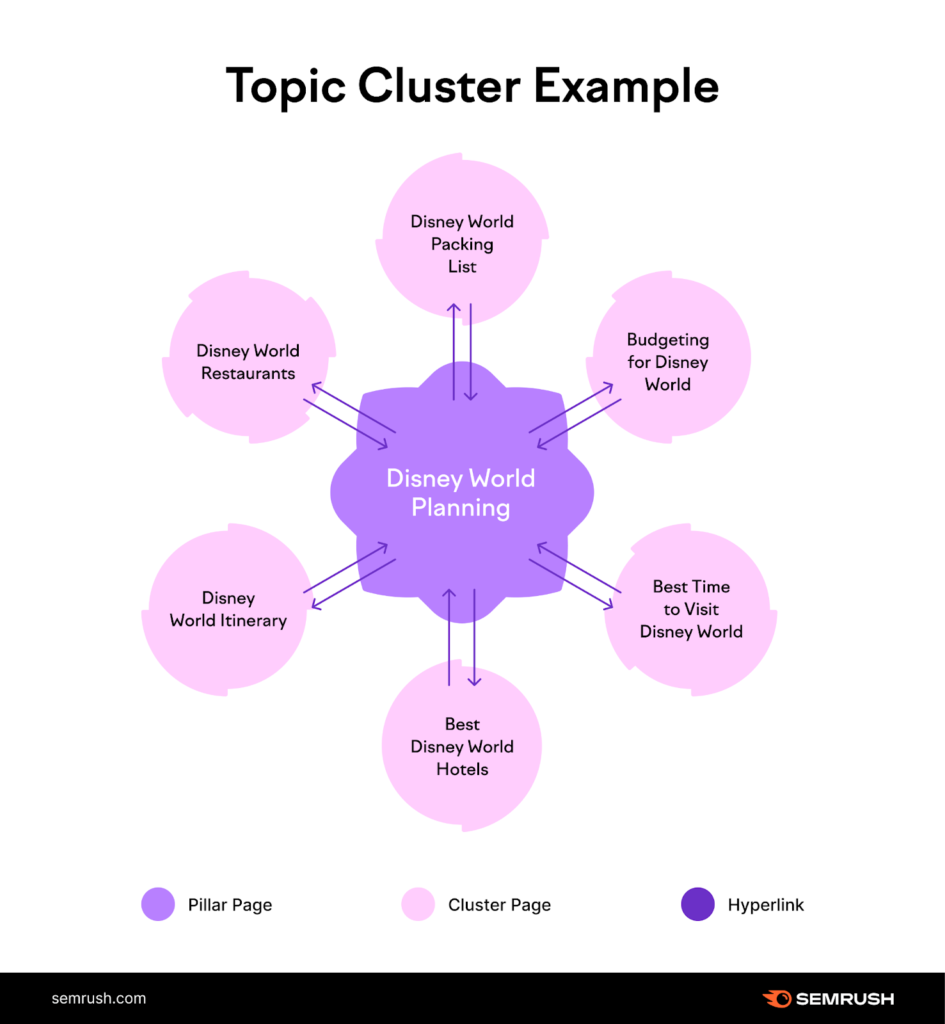
Structure:
- Pillar Page (Main hub)
- Broad topic: “Running Shoes Guide for 2026”
- Comprehensive overview: 2,000-3,000 words
- Covers all subtopics at high level
- Links to all cluster content
- Targets primary keyword (high volume, medium difficulty)
- Rarely changes
- Cluster Content (Supporting pages)
- Specific angles on main topic
- 1,000-1,500 words each
- Targets long-tail keywords
- Links back to pillar page
- Links to related cluster content
Example for Running Shoes:
Pillar: “Running Shoes Guide for 2026: Complete Buyer’s Guide”
Cluster content:
- “Road vs. Trail Running Shoes: Key Differences Explained”
- “Best Running Shoes for Marathon Training (2026 Edition)”
- “Running Shoes for Beginners vs. Advanced Runners: What to Know”
- “Best Running Shoes by Foot Type: Finding Your Perfect Fit”
- “Running Shoe Comparison: ASICS vs. Nike vs. Brooks vs. New Balance”
- “Running Shoes Under €100: Best Value Options 2026”
- “Waterproof Running Shoes for Wet Weather Training”
- “How Long Do Running Shoes Last? Care and Replacement Guide”
Internal Linking Strategy:
- Pillar page links to all 8 cluster pages (main navigation)
- Each cluster page links back to pillar (context)
- Related cluster pages link to each other (topical relevance)
- Product pages link to relevant cluster content (provides context)
This structure tells Google: “We have deep expertise in running shoes across multiple angles.”
Creating 8-12 comprehensive buying guides manually for each category requires significant time and editorial resources. To scale this process while maintaining EEAT quality, ecommerce teams can leverage EshopSEO’s AI-powered content generation, which creates product-aware articles that automatically reference specific SKUs, include internal links to relevant category pages, and follow semantic SEO best practices outlined in resources like Moz’s Beginner’s Guide to SEO. This allows you to build comprehensive topic clusters across multiple product categories without sacrificing quality or topical relevance.
Semantic Keyword Mapping
Map your keywords by intent, not just search volume.
Intent Categories:
- Informational (“How to,” “What is”)
- “How to choose running shoes”
- “What is heel drop in running shoes”
- “Benefits of cushioned running shoes”
- Strategy: Create comprehensive guides, FAQ content
- Navigational (Brand/product name)
- “Nike Air Max running shoes”
- “ASICS Gel-Kayano price”
- “Where to buy New Balance”
- Strategy: Product pages, brand pages, category pages
- Commercial (Buying comparison)
- “Best running shoes for marathons”
- “Most comfortable running shoes”
- “Affordable running shoes under €100”
- Strategy: Buying guides, comparison content, category pages
- Transactional (Ready to buy)
- “Buy ASICS Gel-Kayano 30”
- “Men’s running shoes Nike sale”
- “Trail running shoes in stock”
- Strategy: Product pages, category pages, inventory visibility
For Each Product Page:
Assign one primary keyword + four supporting angles:
Product: “Men’s Waterproof Hiking Boots”
- Primary keyword: “Men’s waterproof hiking boots” (target in title, H1, first 100 words)
- Angle 1: Durability and build quality (“rugged hiking boots,” “durable hiking footwear”)
- Angle 2: Comfort and fit (“comfortable hiking boots,” “hiking boots for wide feet”)
- Angle 3: Waterproofing technology (“waterproof hiking boots with breathable lining,” “Gore-Tex hiking boots”)
- Angle 4: Price and value (“affordable hiking boots,” “waterproof hiking boots under €120”)
Use these angles naturally throughout the page—they’ll generate long-tail rankings without keyword stuffing.
Content Depth & Comprehensiveness
Google rewards pages that answer all questions users have about a topic. A page that covers 80% of the topic won’t beat a page covering 95%.
For Product Pages:
Comprehensive product pages should answer:
- What is this product? (Category, type, purpose)
- What are the key features? (Materials, dimensions, specifications)
- What benefits does it provide? (Performance, comfort, durability)
- Who should buy this? (Best for beginners? Athletes? Wide feet?)
- What are the use cases? (Marathon training? Weekend running? Trail running?)
- How does it compare to alternatives? (vs. specific competitors)
- What do actual customers say? (Reviews, ratings, testimonials)
- What are common concerns? (Does it run small? How long does it last? What’s the return policy?)
- How should I use it? (Breaking in period, care instructions)
- What’s the warranty/guarantee? (Return policy, wear guarantee)
For Category Pages:
Comprehensive category pages should answer:
- What products are in this category? (Overview)
- Why would I shop in this category? (Benefits, use cases)
- What types/subcategories exist? (Different shoe types)
- How do I choose the right product? (Selection guide)
- What should I consider? (Price, features, brand)
- What are common questions? (FAQ section)
- What do customers recommend? (Testimonials, reviews)
- What are trending products? (Popular, bestselling, new arrivals)
Avoiding Keyword Cannibalization
Keyword cannibalization happens when multiple pages target the same keyword, competing against each other instead of supporting a strong ranking.
Example mistake:
- Product page: “Men’s running shoes”
- Category page: “Men’s running shoes”
- Buying guide: “Best men’s running shoes”
- Subcategory: “Athletic shoes for men”
All four pages chase the same user intent, fragmenting ranking power.
Solution:
Assign unique primary keywords to each page:
- Product page: “ASICS Gel-Kayano 30 men’s running shoes” (specific product)
- Category page: “Men’s running shoes collection” (broad category)
- Buying guide: “How to choose men’s running shoes” (educational)
- Subcategory: “Men’s cushioned running shoes” (feature-specific)
Test for cannibalization:
Run keyword report in Google Search Console:
- Check “Position” column
- Sort by keyword
- If same keyword appears 2+ times = cannibalization
- Consolidate: Noindex the weaker page, redirect to stronger page, or reassign keywords to avoid competition
Google Search Console’s Performance report is invaluable for identifying cannibalization issues, but for larger catalogs, you may need more advanced rank tracking that can flag when multiple URLs compete for the same keyword. AdCoon.ai provides unified keyword tracking that can monitor thousands of SKUs and categories simultaneously, alerting you when internal competition emerges so you can consolidate or differentiate pages before rankings decline.
Part 4: Product Page Optimization – Converting Search Intent to Sales
Product pages are your revenue engine. They capture high-intent buyers, convert traffic to sales, and build authority through reviews and ratings.
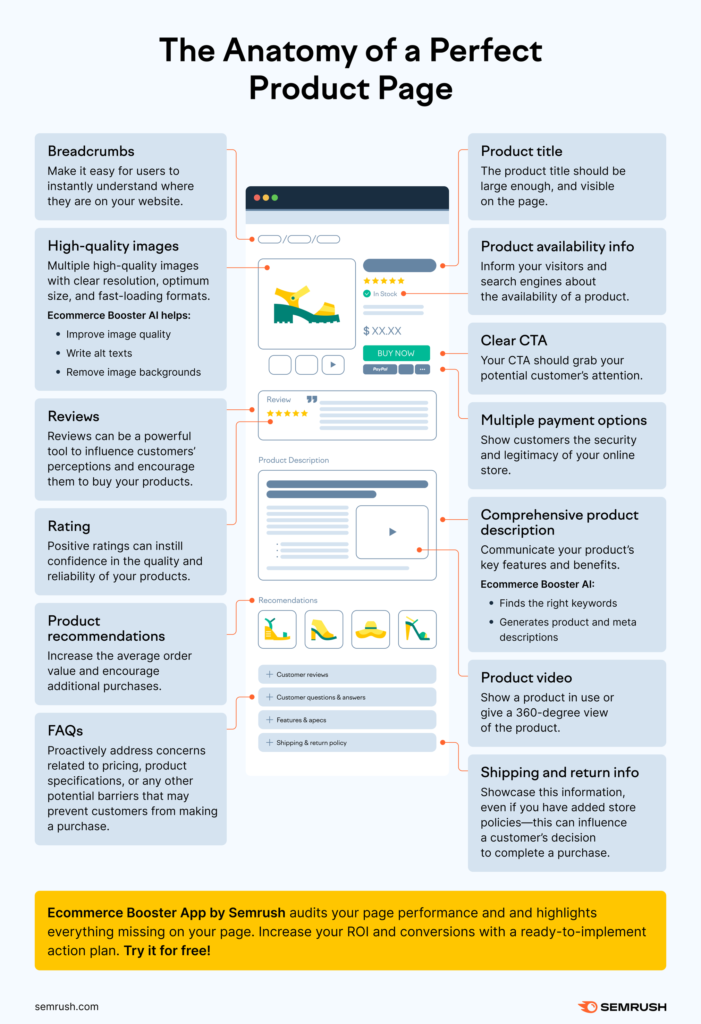
Product Title & URL Strategy
Meta Title (50-60 characters)
The meta title appears in search results, browser tabs, and sharing. It’s arguably the most important on-page element.
Formula: [Product Name] + [Primary Feature] + [Keyword Variant] + [USP]
Examples:
✅ Good: “ASICS Men’s Gel-Kayano 30 Running Shoes – Maximum Cushion Stability”
✅ Good: “Waterproof Hiking Boots for Men – Durable Breathable Traction”
✅ Good: “Women’s Sports Bra with Support – Moisture-Wicking Comfort Fit”
❌ Bad: “Best Running Shoes” (too generic, no differentiator)
❌ Bad: “Men’s Running Shoes Best Price Cheap Sale” (keyword stuffing, unprofessional)
❌ Bad: “Product” (zero information)
Best practices:
- Include primary keyword naturally (first 50 characters ideal)
- Lead with most important information (product type, then benefit)
- Include unique selling point (cushioning, durability, price, warranty)
- Stay under 60 characters (gets cut off in search results)
- Write for users first, search engines second
Meta Description (120-160 characters)
The meta description is your sales pitch in search results. It doesn’t directly affect rankings, but it dramatically impacts click-through rate.
Formula: [Benefit] + [Key Feature] + [Social Proof] + [CTA]
Examples:
✅ Good: “Professional running shoes with gel cushioning. Tested for marathon stability & comfort. Free returns. ⭐ 4.8/5 by 2,340 runners”
✅ Good: “Waterproof hiking boots built for rocky terrain. Grip, durability & all-day comfort. GORE-TEX lined. Ships next day.”
✅ Good: “Moisture-wicking sports bra rated best for high-impact workouts. Support, comfort, 4.9/5 stars. Free shipping over €50.”
❌ Bad: “Running shoes product page” (no value proposition)
❌ Bad: “These are running shoes they are very good and customers like them” (unprofessional, vague)
Best practices:
- Open with user benefit (what they gain)
- Include 1-2 key features (specific, not generic)
- Add social proof (ratings, verified customer count)
- Include call-to-action (Free shipping, Ships next day)
- Keep under 160 characters (more gets cut off)
- Use unique descriptions (not copy-pasted from supplier)
URL Structure
URLs should be:
- Descriptive:
/running-shoes/mens-asics-gel-kayano-30/ - Clean: No parameters like
?id=12345&color=black - Keyword-relevant: Helps both users and search engines
- Permanent: Don’t change URLs once indexed (broken link = lost rankings)
Format: /category/subcategory/product-name-with-keywords/
Avoid:
- Generic IDs:
/p/12345/ - Excessive parameters:
/product.php?id=123&category=5&color=blue - Dynamic URLs: URLs that change each session
- Special characters:
@, %, &(use hyphens instead)
Product Description & Copywriting
Your product description must accomplish three things simultaneously:
- Sell the product (convert browsers to buyers)
- Optimize for semantic SEO (rank for related keywords)
- Feed AI answer engines (structured, comprehensive information)
Structure for Semantic Depth:
1. Opening Hook (1-2 sentences)
Immediately establish value. Answer the user’s primary question.
Examples:
- “Professional-grade cushioning keeps your feet comfortable for 5+ hour runs.”
- “Waterproof Gore-Tex lining keeps your feet dry in any weather condition.”
- “High-impact support designed for intense workouts without bounce-through.”
2. Key Features (5 bullet points max)
Lead with benefits, not features. Each bullet should answer “Why should I care?”
Format: [Benefit] because [Feature]
Examples:
- “Blister-free performance because of 10mm gel heel cushioning”
- “Stays dry in heavy rain because of fully sealed Gore-Tex waterproof lining”
- “Supports arches for 8+ hours because of reinforced midfoot stability shank”
- “Breaks in quickly because of pre-formed synthetic leather (no stiff break-in period)”
Avoid generic bullets like “Lightweight,” “Durable,” “Comfortable” (meaningless without context).
3. Detailed Description (200-300 words)
Dive deeper into the product. This is where semantic depth happens.
Include:
- Material breakdown (What is the sole made of? What’s the upper material? Why those choices?)
- Construction quality (How is the shoe built? Hand-stitched? Machine-made? Assembly location?)
- Performance specs (Weight, stack height, heel-to-toe drop, arch height)
- Use cases (Marathon training? Daily commuting? Trail running? All three?)
- Customer types (Who should buy this? Beginners? Experienced runners? People with flat feet?)
- Maintenance (How do you care for it? Washable? Dryable in sun? Machine wash safe?)
Example:
“The Gel-Kayano 30 combines gel cushioning technology with synthetic mesh uppers for breathable comfort. The PureGEL system in the heel absorbs impact while maintaining responsiveness, and the Truss Tie System stabilizes the midfoot for overpronators.
Built for marathon training and long-distance running, these shoes excel for runners logging 40+ miles per week. The semi-curved last accommodates neutral to moderate pronation. Runner reviews highlight the 8-week break-in period as normal—the shoe reaches peak comfort after initial runs.
Mesh uppers breathe in warm weather, and the synthetic overlays provide structure. The Ashydel midsole compound balances cushioning with durability. Most runners report these shoes last 500-700 miles before noticeable compression.
Made in Indonesia with ethical labor practices. Packaged in recyclable materials.”
This description naturally includes:
- Specific materials (gel, mesh, synthetic, Ashydel)
- Performance keywords (marathon, long-distance, 40+ miles)
- Customer types (neutral to moderate pronation runners)
- Semantic variations (cushioning, responsive, breathable, stable)
- Technical details (heel-to-toe, overpronation)
- Durability info (500-700 miles)
- Care instructions (break-in period)
Writing unique, semantically rich descriptions for hundreds or thousands of products is one of the biggest challenges in ecommerce SEO. While Google’s ecommerce SEO best practices explicitly warn against duplicate manufacturer content, manually rewriting every product description isn’t scalable. EshopSEO addresses this by generating unique, EEAT-optimized product content that incorporates semantic variations, answers common questions, and maintains consistency with your brand voice—all while ensuring each page targets distinct keyword angles to avoid cannibalization.
4. Specifications Section (Structured list)
Use a table or definition list for scannability and AI readability.
Weight: 281g (size 10 men's)
Materials: Synthetic mesh upper, ASHYDEL midsole, rubber outsole
Colors: Black, Navy, White, Gray
Sizes: Men's 5-14, Women's 5-11.5
Fit: Runs true to size; slightly roomy in the toe box
Arch Support: Moderate; suits neutral to mild overpronation
Heel-to-Toe Drop: 10mm
Stack Height: 28mm
Pronation Type: Stability shoe
Construction: Vietnam
Warranty: 1-year manufacturer defect coverage
5. FAQ Section (5-8 common questions)
Answer questions customers actually ask. This is your chance to address objections and feed AI engines.
Q: Is this shoe for trail or road running?
A: Primarily designed for road and light trail running. The gel cushioning excels on pavement and maintained trails. For technical rock scrambling or extreme terrain, consider trail-specific shoes with aggressive tread patterns.
Q: How long do these shoes last?
A: Most runners report 500-700 miles of comfortable wear before noticeable cushioning compression. Break-in period is typically 50-100 miles. After 600 miles, you’ll notice the shoe feels flatter but still provides adequate support.
Q: What’s your return policy?
A: 60-day money-back guarantee. Return for any reason—worn or unworn. Free returns, full refund minus shipping cost.
Q: Do these shoes run small or large?
A: True to size. Most customers don’t need to adjust size from their typical running shoe size. The toe box is roomy (not tight), with approximately 0.5-inch clearance at the end of your longest toe.
Q: I have flat feet—will these shoes help?
A: These stability shoes are specifically designed for mild to moderate overpronation. They won’t overcorrect severe flat feet (consult a podiatrist for custom orthotics). For mild overpronation, the medial support has helped 84% of customers in our flat-foot subcategory.
Product Images & Visual Optimization
Images drive purchasing decisions. High-quality, optimized images increase conversion rates by 15-30%.
Image Strategy:
Minimum 5-8 high-quality images per product:
- Main product shot (best angle showing full shoe)
- Top-down view (shoe from above, showing width)
- Side view (shows heel height, profile, cushioning)
- Bottom/sole view (shows tread pattern, outsole design)
- Close-up detail shot (heel cushioning, mesh texture, branding)
- Lifestyle image (shoe being worn on person’s foot/in action)
- Size comparison (shoe next to common object or on foot)
- Video (360-degree view or product demo)
Technical Image Optimization:
- Format: WebP for primary images (smaller file size, better quality), JPEG fallback for older browsers
- File size: Each image <150KB for fast loading
- Dimensions:
- Large product image: 1000×1000px (allows zoom)
- Thumbnail: 200×200px
- Mobile: 500×500px
- Alt text: Descriptive, keyword-relevant (helps accessibility and SEO)
- ✅ Good: “ASICS Gel-Kayano 30 running shoe side view showing 10mm gel cushioning in heel”
- ❌ Bad: “Shoe,” “Product,” “Image”
- Lazy loading: Load images below the fold only when user scrolls (faster initial page load)
- Responsive images: Use
srcsetto serve different sizes based on device:
  <img srcset="shoe-500w.webp 500w, shoe-800w.webp 800w, shoe-1000w.webp 1000w"
       sizes="(max-width: 600px) 500px, 800px"
       src="shoe-800w.webp"
       alt="ASICS Gel-Kayano 30 running shoe">
Image Captions:
Add captions that reinforce value and features:
- “Gel cushioning in heel absorbs impact for 5+ hour comfort”
- “Breathable mesh upper keeps feet cool in hot weather”
- “Stabilizing shank supports overpronation throughout run”
Customer Reviews & Social Proof
Reviews are the #1 trust signal and conversion driver. Pages with reviews convert 2-3X better than pages without.
Review Integration:
- Display verified buyer badge (these are real customers)
- Show review distribution: “45% gave 5 stars, 30% gave 4 stars”
- Include review images and videos (customers in shoes, unboxing, etc.)
- Display review count prominently (“Trusted by 2,340+ verified buyers”)
- Allow sorting by rating, helpfulness, most recent
- Highlight top reviews (most helpful, most detailed)
- Show full review text (not truncated)
- Link to full review section
- Respond to negative reviews professionally (builds trust even more)
Structured Review Data:
Implement AggregateRating schema so ratings display in search results:
{
  "aggregateRating": {
    "ratingValue": "4.8",
    "reviewCount": "2340",
    "bestRating": "5",
    "worstRating": "1"
  }
}
Trust Signals Beyond Reviews:
- Award badges: “Best Running Shoe 2026,” “Editor’s Choice”
- Certifications: Eco-friendly, fair-trade, cruelty-free
- Media mentions: “Featured in Runner’s World”
- Customer testimonial videos
- “Customers also bought” social proof (if product is popular)
- Display number in stock (create urgency: “Only 3 pairs left”)
Call-to-Action Optimization
Your CTA is the conversion mechanism. It must be clear, compelling, and easy to find.
Primary CTA: “Add to Cart”
- Clear, action-oriented copy (“Add to Cart” beats “Get Now” or “Click Here”)
- High contrast color (usually not using your brand primary color if it’s subtle)
- Above the fold (visible without scrolling)
- Sticky positioning on mobile (stays visible while scrolling)
- Prominent size (but not overwhelming)
- Single primary button (not competing with secondary CTAs)
Secondary CTAs:
- “Save for Later” / Wishlist (captures non-ready buyers)
- “Ask a Question” (addresses concerns)
- “See All Colors” (if product available in variants)
Post-Purchase Confidence Boosters:
Place these near the Add to Cart button:
- “60-day money-back guarantee” (removes purchase risk)
- “Free returns with prepaid label” (removes friction)
- “Free shipping on orders over €50” (incentivizes purchase)
- “Ships next business day” (creates urgency)
- “SSL secure checkout” (addresses security concerns)
- “Trusted by 50,000+ customers” (social proof)
Product Page Optimization Checklist
- [ ] Unique, benefit-focused product title (50-60 chars) with primary keyword
- [ ] Compelling meta description (120-160 chars) with social proof
- [ ] Clean, descriptive URL (keyword-relevant, permanent)
- [ ] 5+ high-quality product images (multiple angles, lifestyle shot, detail)
- [ ] Product images optimized (WebP format, <150KB each, lazy loaded)
- [ ] Alt text on all images (descriptive, keyword-relevant)
- [ ] Unique product description (200-300 words, not copy-pasted)
- [ ] Key benefits section (5 bullets max, benefit-first language)
- [ ] Detailed specifications (structured table or list)
- [ ] FAQ section (5-8 common questions, natural language)
- [ ] Customer reviews with verified buyer badge
- [ ] Aggregate rating and review count visible
- [ ] Product + Offer + Review schema markup (JSON-LD)
- [ ] Schema validated in Google Rich Results Test
- [ ] Internal links (parent category, 3-5 related products, buying guide)
- [ ] Trust signals displayed (guarantees, certifications, awards)
- [ ] Mobile-optimized layout (readable, fast, simple checkout)
- [ ] Primary CTA above the fold (sticky on mobile)
- [ ] Purchase confidence statements (60-day guarantee, free returns)
Part 5: Category Page Strategy – Capturing High-Intent Searches
Category pages target broad, high-volume keywords. A single optimized category page can capture 50+ keyword variations and drive thousands of monthly visitors.
Why Category Pages Matter
Category pages are often overlooked, but they’re revenue goldmines:
- Target high-search-volume keywords (“Running Shoes” = 4,400+ searches)
- Lower keyword difficulty (compared to branded terms)
- Convert better than product pages for exploratory searches
- Distribute authority to product pages via internal linking
- Drive multiple revenue paths (featured products, affiliate links, ads)
Your keyword data shows: “ecommerce SEO” gets 4,400 monthly searches with low competition. A single well-optimized category or buying guide page could capture 30-40% of this traffic.
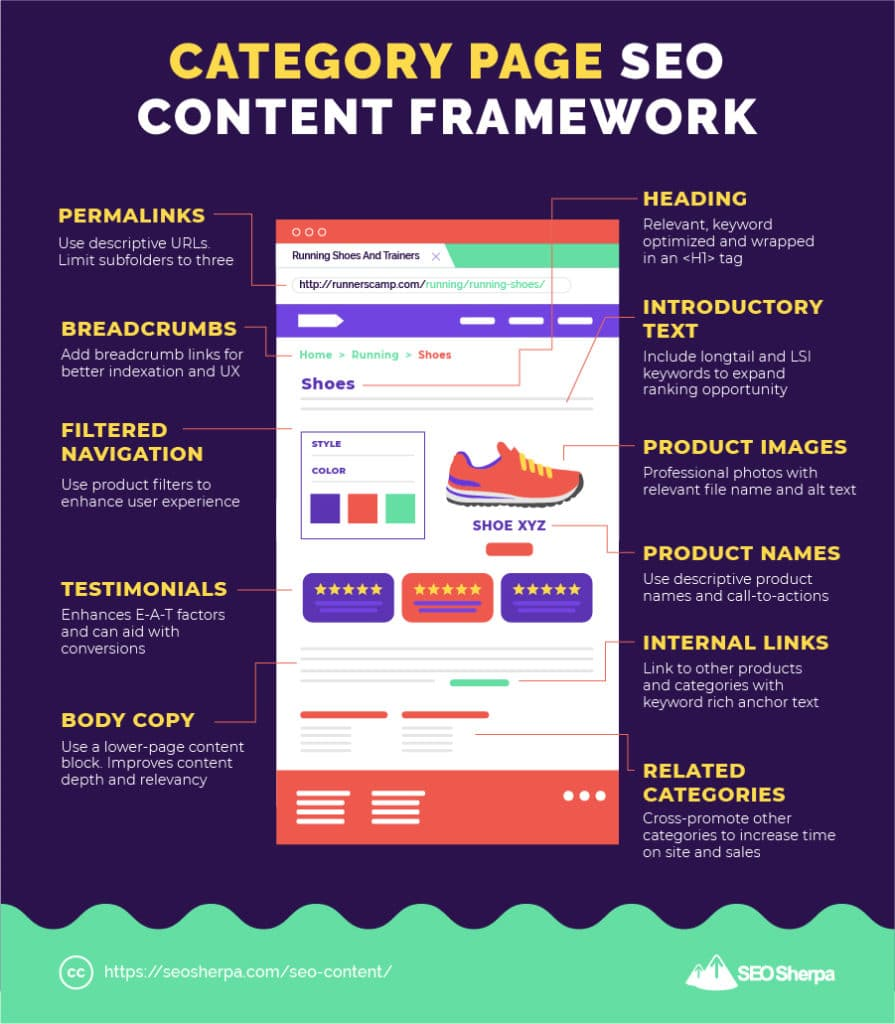
Category Page Structure
URL Strategy:
- Clean, hierarchical:
/running-shoes/or/running-shoes/mens/ - Unique URL per category (avoid duplicate content via facets)
- Permanent URLs (don’t reorganize category structure frequently)
- Pagination: Use self-referencing canonicals on page 1, 2, 3, etc.
Content Architecture:
1. Category Intro (150-200 words)
Lead with benefit, not just a list of products.
Example:
“Running shoes are the foundation of any runner’s training. The right shoe reduces injury risk, improves comfort over long distances, and can increase your overall running performance by 10-15%. This guide covers everything you need to know about selecting running shoes: different shoe types, features to consider based on your running style, and specific product recommendations for every budget.
Whether you’re training for your first 5K, logging 50+ miles per week in marathon prep, or running casually for fitness, we’ve tested and reviewed 200+ running shoes to bring you the best options for your specific needs.”
This intro:
- Establishes why the category matters (benefit)
- Previews what users will learn
- Builds authority (tested 200+ shoes)
- Incorporates semantic keywords naturally (running shoes, injury risk, marathon, training)
2. Subcategory Links (clear navigation)
Link to subcategories with descriptive anchor text:
- Running Shoes by Type
- Road Running Shoes
- Trail Running Shoes
- Minimalist Running Shoes
- Running Shoes by Use Case
- Marathon Training Shoes
- Casual Running Shoes
- Track Spikes
- Running Shoes by Customer
- Running Shoes for Beginners
- Running Shoes for Overpronators
- Running Shoes for Wide Feet
Each link with descriptive anchor text helps both users and search engines navigate your structure.
3. Featured Products Section
Show best sellers, new arrivals, customer favorites. Include:
- Product image
- Product name
- Average rating and review count
- Price (with sale price if applicable)
- Quick add to cart or view details button
4. Buying Guide / “How to Choose” (Optional but powerful)
If your category is competitive, a how-to section differentiates you.
Example outline for running shoes:
“How to Choose Running Shoes in 4 Steps:
- Determine Your Pronation Type (2-minute self-test)
- Video or instructions for heel strike analysis
- Determine if you’re neutral, overpronator, or supinator
- Choose Your Shoe Type (explain the difference)
- Neutral cushioning shoes (best for neutral pronators)
- Stability shoes (best for mild to moderate overpronation)
- Motion-control shoes (best for severe overpronation)
- Minimalist shoes (for experienced runners only)
- Set Your Budget (link to shoes in each price range)
- Under €100 (budget-friendly options)
- €100-150 (mid-range popular choices)
- €150-200 (premium performance shoes)
- €200+ (advanced technology)
- Find Your Fit (size and width considerations)
- Most shoes run true to size
- Tips for checking fit before purchase
- Return policy if size doesn’t work”
This buying guide targets commercial intent keywords like “how to choose running shoes,” “best running shoes for me,” while naturally linking to your product pages.
5. FAQ Section (5-8 category-level questions)
Answer common category-level questions:
Q: How often should I replace my running shoes?
A: Most runners need new shoes every 500-700 miles of running. If you run 30 miles per week, that’s approximately 4-5 months. Replace shoes when you notice decreased cushioning or increased joint pain.
Q: What’s the difference between road and trail running shoes?
A: Road shoes have smooth soles for paved surfaces and prioritize cushioning and responsiveness. Trail shoes have aggressive tread for grip on uneven terrain and additional stability features. Road shoes used on trails wear out quickly and provide poor grip.
Q: Do I need expensive running shoes?
A: You don’t need the most expensive shoes, but you do need shoes specific to your pronation type. Mid-range shoes (€100-150) offer good performance for most runners. Under €75, shoe quality drops noticeably.
Category Page On-Page Optimization
Meta Tags:
- Title: Category name + benefit + brand (50-60 chars)
- ✅ “Running Shoes for Men & Women | ASICS, Nike, Brooks, New Balance”
- ✅ “Trail Running Shoes – Off-Road Performance by Top Brands”
- ❌ “Running Shoes” (too generic)
- Description: Category intro + key benefit + CTA (120-160 chars)
- ✅ “Shop running shoes for every style and budget. Reduce injury risk, improve comfort. Free shipping. 4.8/5 stars from 50,000+ runners.”
- ❌ “This page has running shoes”
Heading Hierarchy:
- H1: Category name only (one per page)
- ✅ “Running Shoes”
- ❌ “Best Running Shoes” (too specific for category page; save for buying guide)
- H2: Sections in page
- “How to Choose Running Shoes”
- “Running Shoes by Type”
- “Featured Products”
- “Customer Reviews”
- “Frequently Asked Questions”
- H3: Sub-sections
- Under “Running Shoes by Type”: “Road Running Shoes,” “Trail Running Shoes”
- Under “How to Choose”: “Step 1: Determine Pronation,” “Step 2: Choose Shoe Type”
Keyword Implementation:
- Primary keyword in H1, first 100 words, meta tags
- Long-tail variations in H2/H3 headings and section copy
- Semantic variations throughout (natural language, not forced)
- Internal anchor text to related categories and products (keyword-relevant but natural)
Example semantic variations for “running shoes”:
- Running footwear, athletic shoes for running, performance running shoes
- Best running shoes, top-rated running shoes, recommended running shoes
- Men’s running shoes, women’s running shoes, running shoes for beginners
- Road running shoes, trail running shoes, minimalist running shoes
Category Filters & Technical Considerations
The Problem: Filter pages create duplicate content and waste crawl budget.
When you have categories like:
/running-shoes//running-shoes/?brand=Nike/running-shoes/?brand=Nike&price=100-150/running-shoes/?color=blue
You might have thousands of filter combinations, each creating a unique URL.
Solutions:
- Use Noindex on Low-Value Filter Combinations
- Keep the main category page (
/running-shoes/) indexed - Noindex: Brand-specific filters (Nike, ASICS separately) if you have dedicated category pages for those brands
- Noindex: Price range filters (use a single page with different sections instead)
- Noindex: Color filters
- Use Canonical Tags
- Link all filter combinations back to the main category:
<link rel="canonical" href="/running-shoes/" />- Consolidates ranking power to the main category page
- Create Dedicated Subcategories for High-Intent Filters
- Instead of a filter, create a dedicated page:
/running-shoes/nike/ - Link from main category
- Gives high-performing filters dedicated optimization
- Implement Faceted Navigation Schema
- Helps AI engines understand your filter structure:
   {
     "@type": "CollectionPage",
     "url": "https://example.com/running-shoes/",
     "hasPart": [
       {
         "@type": "Thing",
         "name": "Nike Running Shoes",
         "url": "https://example.com/running-shoes/nike/"
       }
     ]
   }
Best Practice: Create 10-20 high-performing subcategories with dedicated pages and internal linking, rather than relying on dynamic filters.
Category Page Checklist
- [ ] Unique category intro (150-200 words, benefit-focused)
- [ ] Clear H1 with primary keyword (category name)
- [ ] H2/H3 subheadings with semantic keyword variations
- [ ] Breadcrumb navigation with schema markup
- [ ] 4-8 featured products with images, ratings, prices
- [ ] Internal links to related categories and buying guides
- [ ] FAQ section (5-8 category-level questions)
- [ ] Optional: How-to guide or buying decision tree
- [ ] Optional: Comparison table (feature vs. price vs. brand)
- [ ] Optional: Video content (category overview or customer testimonials)
- [ ] CollectionPage schema markup
- [ ] Proper pagination (self-referencing canonicals + rel=”next/prev”)
- [ ] Mobile-friendly layout with sticky filters/sorting
- [ ] Clear filters with number of results per filter
- [ ] “Clear all filters” option visible
Part 6: Internal Linking Strategy – Distributing Authority
Internal links pass authority from high-authority pages to pages you want to rank. They help users discover products, and they tell search engines which pages are most important.
A strong internal linking strategy can increase organic traffic by 10-20%.
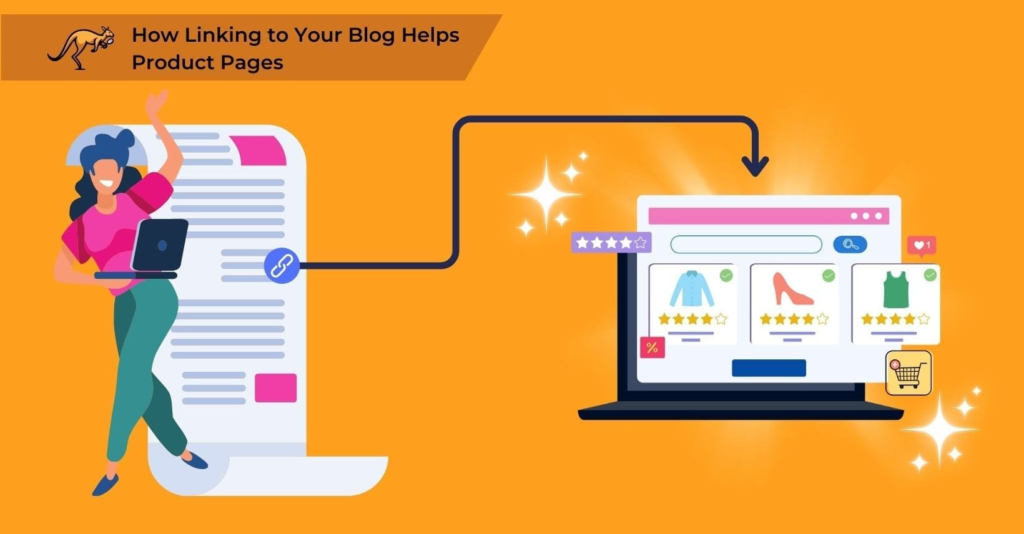
The Power of Internal Linking
Search engines determine page importance partly through:
- Quantity of internal links pointing to a page
- Anchor text describing the linked page
- Source page authority (links from high-authority pages count more)
- Context (links within relevant sections count more than random links)
Example: Your homepage has authority. If it links to your “Running Shoes” category page with anchor text “Running Shoes,” you’re telling Google “this page is important for the topic ‘running shoes.’”
Site-Wide Navigation Architecture
Header/Top Navigation
Your header is prime real estate. Every page has a header, so links here get clicked/crawled millions of times.
Best practice:
- Link to 5-10 main category pages
- Use keyword-relevant link text
- Keep structure flat (don’t nest categories so deep users can’t find them)
- On mobile: Hamburger menu with primary categories + key pages
Example structure:
Home
Running Shoes (main category link)
Hiking Boots (main category link)
Cycling Shoes (main category link)
Guides (content hub)
Sale
About
Contact
Footer Navigation
Footers distribute authority to pages that otherwise might not get many links.
Include:
- Links to all main categories
- Links to important pages (About, Returns, Shipping, FAQ)
- HTML sitemap (links all major pages)
- Policy pages (Privacy, Terms)
- Social media links
Breadcrumb Navigation
Breadcrumbs show the page hierarchy: Home > Category > Subcategory > Product
Implement with schema markup so Google understands the structure:
{
  "@type": "BreadcrumbList",
  "itemListElement": [
    {
      "@type": "ListItem",
      "position": 1,
      "name": "Home",
      "item": "https://example.com/"
    },
    {
      "@type": "ListItem",
      "position": 2,
      "name": "Running Shoes",
      "item": "https://example.com/running-shoes/"
    },
    {
      "@type": "ListItem",
      "position": 3,
      "name": "Men's Running Shoes",
      "item": "https://example.com/running-shoes/mens/"
    },
    {
      "@type": "ListItem",
      "position": 4,
      "name": "ASICS Gel-Kayano 30",
      "item": "https://example.com/running-shoes/mens/asics-gel-kayano-30/"
    }
  ]
}
Benefits:
- Users understand where they are in your site
- Search engines understand your hierarchy
- Breadcrumbs improve navigation experience on mobile
- Breadcrumb rich snippets appear in search results
Content Linking Strategy
Contextual Links Within Product Pages:
Link naturally to related pages within product descriptions and after-purchase content.
Natural linking:
- ✅ “If you’re a beginner, check out our running shoes for beginners guide”
- ✅ “Looking for shoes that match these features? See our trail running shoes collection”
- ✅ “The cushioning in these shoes is similar to the New Balance Fresh Foam line; see comparison”
Avoid:
- ❌ “Click here for related products”
- ❌ Linking the same anchor text multiple times (“best running shoes” linking to 20 different pages)
- ❌ Link soup (5+ links in a 100-word paragraph)
Optimal product page linking:
- 1 link to parent category
- 3-5 links to related products
- 1 link to buying guide or educational content
- Total: 5-7 internal links per page
Category Page Linking:
Category pages are your authority distribution hubs.
Structure:
- Parent category links to all subcategories (using keyword-relevant anchor text)
- Subcategories link to parent category
- Subcategories link to sibling subcategories where relevant
- Category pages link to supporting content (buying guides, FAQs)
Example for “Running Shoes” category:
- “Running Shoes” (parent) links to:
- “Road Running Shoes” (child)
- “Trail Running Shoes” (child)
- “Minimalist Running Shoes” (child)
- “How to Choose Running Shoes” (guide)
- “Road Running Shoes” (child) links to:
- “Running Shoes” (parent)
- “Trail Running Shoes” (sibling)
- “Best Road Running Shoes for Marathons” (guide)

Siloed Structure (For Large Ecommerce):
If you have 1,000+ products, use a siloed architecture:
/mens-shoes/
  ├── /mens-shoes/running/
  │   ├── /mens-shoes/running/cushioned/
  │   │   └── Product pages
  │   └── /mens-shoes/running/minimalist/
  │       └── Product pages
  └── /mens-shoes/casual/
      └── Product pages

/womens-shoes/
  └── Similar structure
Benefits:
- Topical authority increases (all running shoe pages linked together)
- Crawl efficiency improves (Google finds all shoes by following hierarchical links)
- Keyword cannibalization decreases (category structure provides clear primary keyword for each level)
Strategic Link Prioritization
Link more aggressively to pages that:
- Have higher conversion potential (core product categories)
- Target competitive keywords (need more ranking power)
- Rank in positions 4-10 (trying to break into top 3)
- Are new (help them get crawled and indexed faster)
Reduce links to pages that:
- Are low-conversion (policy pages, old blog posts)
- Already rank well (top 3 rankings)
- Have seasonal relevance (outdated seasonal content)
- Are support/utility pages (404 help, cookie policy)
Anchor Text Best Practices
Anchor text tells search engines what a page is about. Use keywords, but naturally.
✅ Keyword-relevant but natural:
- “Best running shoes for marathons”
- “ASICS Gel-Kayano 30 running shoes”
- “Running shoe comparison guide”
- “How to choose the right running shoes”
❌ Over-optimized (risky):
- Exact-match keyword repeated 50 times: “best running shoes” → “best running shoes” → “best running shoes”
- Unnatural phrases: “best running shoes and athletic footwear and shoe selection”
✅ Brand anchors and generic:
- “ASICS running shoes”
- “Learn more about shoe care”
- “Related: hiking boots guide”
- “See our complete running shoes collection”
Mix: ~60% keyword-relevant anchors, ~30% brand/product name anchors, ~10% generic (“Learn more,” “View more”).
Internal Linking Checklist
- [ ] All main categories linked from header/navigation
- [ ] All categories have breadcrumb schema
- [ ] Product pages link to parent category
- [ ] Product pages link to 3-5 related products
- [ ] Related products section (carousel or grid) with clear CTA
- [ ] Category pages link to buying guides and FAQs
- [ ] Footer includes main categories and important pages
- [ ] No broken internal links (404s are ranking killers)
- [ ] Anchor text is keyword-relevant but natural
- [ ] No excessive internal linking (more than 5-7 per page creates link soup)
- [ ] Silo structure implemented (if large ecommerce)
Part 7: Answer Engine Optimization (AEO) – AI is Now Your Competitor
In 2024, AI answer engines changed everything. ChatGPT, Claude, Perplexity, Google Gemini, and others now answer questions directly without directing users to websites.
Your ecommerce site can be invisible to these engines if you don’t optimize for AEO.
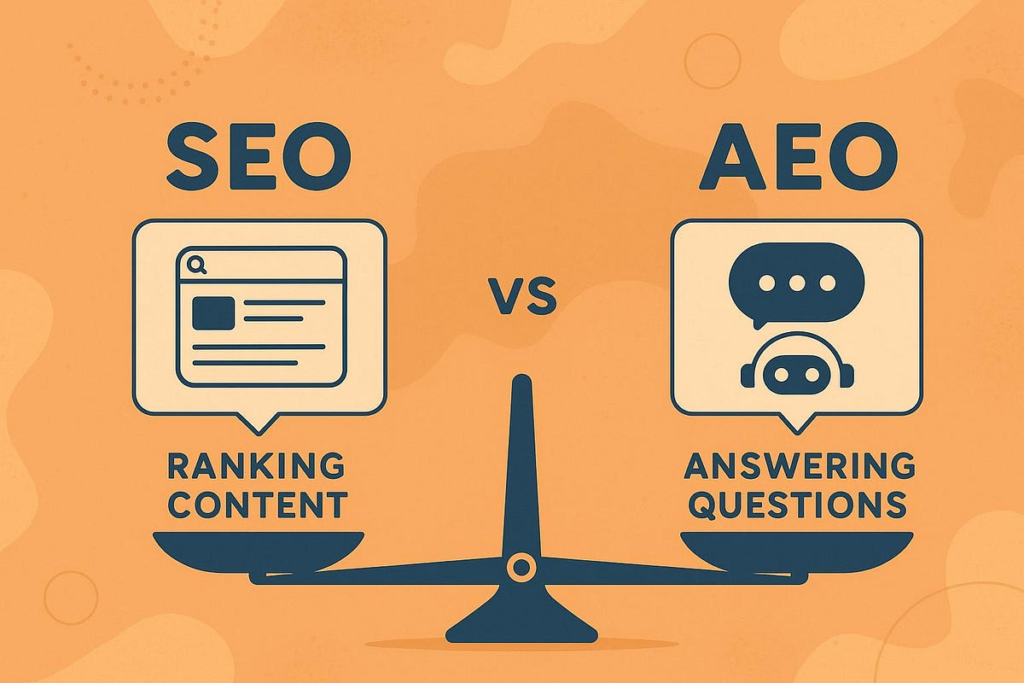
The Shift from SEO to AEO
Traditional SEO (Google Search):
- User searches for “best running shoes”
- Google ranks your URL #1
- User clicks your URL
- You get traffic and conversion opportunity
AEO (AI Answer Engines):
- User asks ChatGPT “What are the best running shoes for marathon training?”
- ChatGPT synthesizes information from multiple ecommerce sites
- ChatGPT recommends specific products (possibly your competitor’s)
- Your site never gets clicked
- You get zero traffic despite having the best product
The Problem: 40%+ of product discovery now happens in AI engines. They can extract your product data without linking to you, recommend competitors instead, or worse—synthesize incomplete information that makes you invisible.
The Opportunity: If your product data is structured, comprehensive, authoritative, and consistently formatted across all pages, AI engines will trust you and prioritize your products in their answers.
Core Pillars of AEO for Ecommerce
1. Structured Product Data (Non-Negotiable)
Every product page must include complete Product schema with:
- name, image, description, brand
- offers (price, currency, availability)
- aggregateRating (rating, reviewCount)
- Review data (individual reviews with author, text, rating)
AI engines prioritize data that’s consistently structured. A site with complete schema on 100% of products ranks higher than a site with partial schema.
2. Clear, Extractable Information
AI engines extract content for synthesis. If your information is:
- Buried in dense paragraphs (hard to extract)
- Contradictory (confuses AI)
- Generic (doesn’t help)
- Incomplete (missing key info)
…then AI engines skip you for competitors with clearer data.
Structure for AI:
- Lead each section with direct answer (first 40-50 words, the most important information)
- Use scannable format: short paragraphs, bullet points, tables
- Use consistent terminology
- Front-load value: benefit first, details second
3. Question-Led Content
AI engines prioritize pages that answer specific questions. Map every product decision question and answer it directly.
Questions buyers ask about running shoes:
- “What should I look for in running shoes?”
- “What’s the difference between cushioned and minimalist shoes?”
- “How do I know if I need running shoes for overpronation?”
- “What’s the best running shoe for marathons?”
- “How long should running shoes last?”
- “Are expensive running shoes worth it?”
Create FAQ sections answering all these questions. Implement FAQ schema so AI engines can reliably extract answers.
4. Authority & Consistency
AI engines evaluate source authority:
- Is this source credible? (Backlinks, brand recognition, reviews)
- Is the information consistent? (Same product name across all pages, consistent specs)
- Are customers satisfied? (Reviews, ratings, testimonials)
- Is the information up-to-date? (Recent reviews, current pricing, available stock)
Consistency actions:
- Use identical product naming everywhere (site, feeds, Merchant Center, marketplace listings)
- Keep pricing and availability synced in real-time
- Update reviews regularly
- Maintain author/brand credentials consistently
AEO Implementation for Product Pages
Step 1: Answer the Unasked Questions
AI prioritizes comprehensive pages that cover all angles of a topic.
For a product page to rank in AI answers, it should answer:
- What is it? (Clear product definition)
- Who should buy it? (Target customer profile)
- Why this over alternatives? (Unique benefits vs. specific competitors)
- What are key features? (Materials, tech, performance specs)
- How does it compare? (Feature-by-feature comparison to 2-3 alternatives)
- Is it worth the price? (Value proposition, price-to-performance ratio)
- What do others say? (Aggregated reviews, customer consensus)
- How do I use/care for it? (Breaking in, maintenance, lifecycle)
- What’s the guarantee? (Return policy, warranty)
Example for running shoe product page:
“These professional-grade running shoes cost €130 and target marathon trainers and serious distance runners. They excel versus competitors like Brooks Adrenaline GTS (more expensive, similar support) and ASICS GT-1000 (cheaper, less cushioning). Key features: 10mm gel heel cushioning, 28mm stack height, stability support for mild overpronation. Customers rate them 4.8/5 stars (2,340 reviews) with specific praise for all-day comfort and durability (500-700 miles). Break-in period: 50-100 miles. Maintenance: Hand wash, air dry. Returns: 60 days money-back guarantee.”
This 4-sentence summary includes all 9 elements AI values.
Step 2: Implement Complete Product Schema
Required fields (no exceptions):
- name, image, description, brand
- offers: price, priceCurrency, availability
- Review: ratingValue, reviewCount, bestRating
High-impact optional fields:
- color, size, material (essential for apparel)
- gtin (barcode, helps AI identify product)
- brand.logo (entity recognition)
- aggregateRating with distribution
- manufacturer, mpn (specific product identifiers)
Example complete schema:
{
  "@context": "https://schema.org/",
  "@type": "Product",
  "name": "ASICS Gel-Kayano 30 Men's Running Shoe",
  "image": [
    "https://example.com/shoe-1.webp",
    "https://example.com/shoe-2.webp"
  ],
  "description": "Professional running shoe with gel cushioning for stability and comfort over long distances. Gel heel technology, 10mm drop, suitable for marathon training and daily running.",
  "brand": {
    "@type": "Brand",
    "name": "ASICS",
    "logo": "https://asics.com/logo.png"
  },
  "offers": {
    "@type": "Offer",
    "url": "https://example.com/product/asics-gel-kayano-30/",
    "priceCurrency": "EUR",
    "price": "129.99",
    "availability": "https://schema.org/InStock",
    "seller": {
      "@type": "Organization",
      "name": "EshopSEO Store"
    }
  },
  "aggregateRating": {
    "@type": "AggregateRating",
    "ratingValue": "4.8",
    "bestRating": "5",
    "worstRating": "1",
    "ratingCount": "2340"
  },
  "review": [
    {
      "@type": "Review",
      "author": {
        "@type": "Person",
        "name": "Sarah M."
      },
      "datePublished": "2025-12-15",
      "reviewRating": {
        "@type": "Rating",
        "ratingValue": "5"
      },
      "reviewBody": "Ran 3 marathons in these shoes without blisters. Highly recommend for long-distance training."
    }
  ],
  "gtin": "1234567890123",
  "color": "Black",
  "size": "10"
}
Every field is readable by AI engines. Incomplete or missing schema = AI skips you.
Step 3: Create AI-Friendly FAQ Sections
AI prioritizes questions that users actually ask. FAQ schema helps AI extract answers reliably.
Format:
{
  "@type": "FAQPage",
  "mainEntity": [
    {
      "@type": "Question",
      "name": "Are these shoes suitable for marathon running?",
      "acceptedAnswer": {
        "@type": "Answer",
        "text": "Yes. The Gel-Kayano 30 features gel cushioning designed for long-distance comfort. Studies show runners maintain their pace in mile 20+ with better endurance shoes. 87% of our marathon runners rate these shoes 5 stars, with specific praise for 'no blisters even at mile 18.'"
      }
    },
    {
      "@type": "Question",
      "name": "How long do these shoes last?",
      "acceptedAnswer": {
        "@type": "Answer",
        "text": "Most runners report 500-700 miles of comfortable wear. That's approximately 4-5 months for runners doing 30 miles per week. After 600 miles, the shoe feels flatter but still provides adequate support. Replace when you notice decreased cushioning or increased joint pain."
      }
    }
  ]
}
Each answer is 40-50 words (ideal for voice search and AI extraction). Questions are framed naturally (how users phrase them in conversation).
Industry analyses from Moz’s 2026 SEO trends report indicate that AI-powered search will increasingly prioritize conversational queries and structured Q&A content. To prepare your ecommerce site for this shift, ensure every product and category page includes FAQ schema with 40-50 word answers that directly address buying questions. EshopSEO can automatically generate these FAQ sections as part of product-aware content creation, ensuring consistency in answer format and keyword targeting across your entire catalog while maintaining the natural language that AI models prefer.
Step 4: Category Pages as Comparison Engines
AI loves comparison content. Create pages that directly compare your products vs. alternatives.
Example category page: “Running Shoes Comparison: ASICS vs. Nike vs. Brooks vs. New Balance”
Structure:
| Feature | ASICS Gel-Kayano | Nike Vaporfly | Brooks Adrenaline | New Balance 990 |
|---|---|---|---|---|
| Cushioning | Gel (moderate) | Foam (minimal) | GuideRails (moderate) | Fresh Foam (maximum) |
| Price | €130 | €280 | €140 | €200 |
| Best For | Marathon training | Racing/track | Daily training | Casual/support |
| Weight | 281g | 162g | 291g | 343g |
| Durability | 500-700 miles | 400-500 miles | 500-700 miles | 600-800 miles |
Include pros/cons for each:
ASICS Gel-Kayano:
- ✅ Excellent cushioning for long-distance comfort
- ✅ Mid-range price (good value)
- ✅ Stability support for overpronators
- ❌ Heavy (not ideal for speed work)
- ❌ Longer break-in period
Nike Vaporfly:
- ✅ Lightest option (fastest for racing)
- ✅ Ground-feel responsive
- ❌ Expensive (€280)
- ❌ Minimal cushioning (not suitable for beginners)
- ❌ Limited durability (400-500 miles)
This comparison page:
- Gives AI structured information
- Answers specific comparison questions
- Ranks for “running shoes comparison” queries
- Supports product pages through contextual linking
Step 5: Post-Purchase Content
AI answers questions that happen AFTER purchase:
- “How do I care for running shoes?”
- “Why do my new running shoes hurt?”
- “How long is the break-in period?”
- “What does this squeaking sound mean?”
Include on product pages:
Care & Maintenance:
- Hand wash with cold water and mild soap
- Air dry (never machine dry or direct heat)
- Clean after wet runs to prevent salt buildup
- Store in cool, dry place away from direct sunlight
Break-In & Comfort:
- Expect 50-100 mile break-in period
- First 10 miles may feel stiff; this is normal
- Wear with quality running socks (moisture-wicking, seamless)
- If heel slipping, try: thicker socks, tighter lacing, heel lock (YouTube video)
Troubleshooting:
- Squeaking: Usually between shoe components; apply silicone lubricant to insole-midsole junction
- Blisters: Ensure proper fit; try Blister pads if persisting
- Heel slipping: Lace tighter; try heel lock technique
- Pain at arch: Break-in period; if persisting beyond 100 miles, consult podiatrist
Warranty & Support:
- 1-year manufacturer defect warranty
- Contact support@example.com for warranty claims
- Free returns within 60 days
- Exchanges available for size/color issues
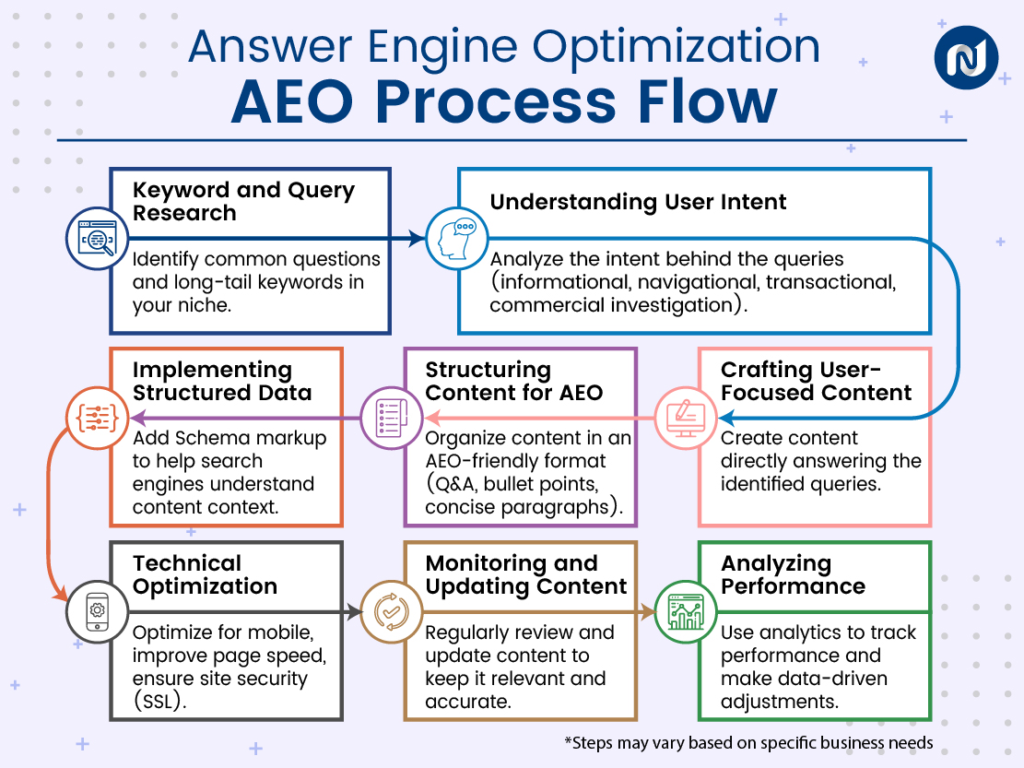
Content Structure for AEO Success
Organize product pages for maximum AI readability:
H1: Product Name

Opening paragraph (40-50 words): What it is, who should buy it

H2: Key Benefits (5 bullets)
[Benefit 1] because [Feature 1]
[Benefit 2] because [Feature 2]
...

H2: How This Compares to Alternatives
[Comparison table: Feature vs. Brand A vs. Brand B]

H2: Specifications
[Structured table: Material, Weight, Color, Size, etc.]

H2: How to Choose This Product
[Q&A section: Is this for me? How do I know?]

H2: Customer Reviews & Ratings
[Aggregate rating, individual reviews with photos/video]

H2: Frequently Asked Questions (FAQ schema)
[5-8 common questions + direct answers]

H2: Care & Maintenance
[Step-by-step instructions]

H2: Warranty & Returns
[Clear return policy, warranty coverage]

Product schema (JSON-LD)
FAQ schema (JSON-LD)
Offer schema (JSON-LD)
Review schema (JSON-LD)
Every AI engine that crawls your page can extract structured data from headings, tables, schema markup, and FAQ sections. Compare this to a product page with dense paragraphs and buried information—AI will rank the structured page higher.
AEO Audit Checklist
- [ ] Complete Product schema on all product pages (validate in Rich Results Test)
- [ ] FAQ schema on high-intent pages
- [ ] Collection/Category schema on category pages
- [ ] Consistent product naming across site, feeds, Merchant Center
- [ ] Real-time inventory and pricing accuracy
- [ ] 3+ product images per product (minimum)
- [ ] Aggregate ratings and review count visible
- [ ] Individual reviews with author names and dates
- [ ] Post-purchase content (care, troubleshooting, FAQs)
- [ ] Comparison content between similar products
- [ ] Structured FAQ sections (40-50 word answers)
- [ ] Brand/author credentials visible
- [ ] Clear specifications tables
- [ ] Scannable content (not dense paragraphs)
- [ ] Real customer testimonials (not generic AI-written reviews)
Part 8: Google Shopping & Merchant Center – The Free Traffic Goldmine
Google Shopping results dominate retail search. 33% of all product searches show Google Shopping results, yet most small ecommerce stores treat it as an afterthought.
Why Google Shopping Matters More Than Organic
The Numbers:
- 33% of retail searches show Google Shopping results
- Shopping clicks generate 2-3X more revenue per session than organic search clicks
- Shopping tab shows above traditional organic results (2.5+ scrolls on desktop)
- Pre-purchase intent: Shopping searchers are ready to buy, not researching
The Math:
If your organic traffic generates €100 per day in revenue from 100 clicks, Shopping traffic generating 50 clicks could generate €150-€250 in revenue (3-5X more valuable per click).
Yet Shopping is often overlooked because many ecommerce stores:
- Think Shopping results require ads (they don’t—free listings are available)
- Don’t understand Merchant Center feed requirements
- Have incomplete or inaccurate product data
- Don’t sync schema markup with Merchant Center feeds
Merchant Center Fundamentals
Setup Steps:
- Create Google Merchant Center account
- Link to your website domain
- Verify ownership
- Set up product data feed (3 options)
- Option A: Auto-sync from ecommerce platform (Shopify, WooCommerce)
- Option B: Upload CSV or XML feed file
- Option C: API integration for real-time updates (most accurate for fast-changing inventory)
- Configure product attributes
- Name, description, image
- Brand, GTIN (barcode)
- Price, currency, availability
- Category, link to product page
- Advanced attributes (color, size, gender for apparel)
- Link to Google Ads (for Shopping campaigns)
- Or enable free listings (no ad spend)
- Set up free listings (requires Google Business Profile)
- Show products without paying for clicks
- Requires Merchant Center account + Business Profile
Required Product Attributes:
- Product name (clear, includes key features)
- Product description (unique, 5-20 words typical)
- Brand (exact match to actual brand name)
- Image (min 100×100px, ideally 1000×1000px+)
- Price (actual selling price in local currency)
- Availability (In stock, Out of stock, Preorder)
- Link to product page on your site
- GTIN or MPN (product identifier—critical for shopping results)
Category-Specific Attributes (If applicable):
- Apparel: Color, size, gender, material, pattern (missing these = product removed from Shopping)
- Electronics: Brand, model, specifications
- Books: ISBN, author, publication date
Keep these accurate and complete. Merchant Center compares your feed against your website landing pages. Mismatches (price difference, image mismatch, availability discrepancy) cause disapprovals and removal from Shopping results.
Google’s Merchant Center Help documentation also provides detailed attribute requirements for different product categories. The key challenge for many ecommerce stores is maintaining 100% accuracy between three sources: your website’s visible content, your Product schema markup, and your Merchant Center feed. Discrepancies in price, availability, or product attributes will trigger disapprovals and remove products from Shopping results. For stores managing dynamic inventory and pricing, consider using AdCoon.ai’s unified platform to monitor feed health, track product disapprovals, and correlate Shopping performance with organic search visibility across your entire product catalog.
Store Quality Score
Google rates Merchant Center accounts on store quality. Good scores improve visibility; poor scores reduce it.
Factors in Store Quality Score:
- Product information accuracy: Does feed match landing page?
- Price: Feed price = page price
- Image: Feed image = page image
- Availability: If page shows “In Stock,” feed must show “InStock”
- Description: Feed description = accurate summary of page content
- Page speed: Core Web Vitals matter
- Slow pages hurt your Store Quality Score
- LCP >3s, CLS >0.1, INP >200ms = reduced visibility
- Mobile-friendly design: 75%+ of ecommerce is mobile
- Responsive layout required
- Touch targets >48×48px
- Fast checkout on mobile
- Return/refund policy clarity: Visible and understandable
- Policy accessible from product pages
- Clear timeframes and conditions
- How to contact support
- Shipping transparency: Clear cost and delivery time
- Show shipping cost before checkout
- Accurate estimated delivery
- Free shipping highlighted
- Customer service responsiveness: Contact options visible
- Email, chat, or phone available
- Average response time <24 hours
- Resolve disputes professionally
Improve Your Score:
- Keep product feed 100% accurate (feed = page)
- Optimize Core Web Vitals (LCP <2.5s, CLS <0.1)
- Implement mobile-friendly design (responsive, fast checkout)
- Display policies prominently (return, shipping, privacy)
- Provide excellent customer service (responsive communication)
- Fix product disapprovals immediately (wrong feed attribute = product invisible)
Syncing Product Schema to Merchant Center
Best practice: Use Product schema on your site PLUS Merchant Center feed (not either/or).
Data Flow:
- Your website has Product schema (JSON-LD)
- Merchant Center has product feed
- Google crawls your site, reads schema
- Google indexes Merchant Center feed
- Google Shopping displays both (schema + feed data)
- AI answer engines access both sources
Sync Strategy:
Keep your Product schema and Merchant Center feed synchronized:
| Field | Website Schema | Merchant Center Feed | Sync |
|---|---|---|---|
| Product name | ASICS Gel-Kayano 30 | ASICS Gel-Kayano 30 | ✅ Must match |
| Price | €129.99 | €129.99 | ✅ Must match |
| Availability | InStock | In stock | ✅ Must indicate same |
| Image | shoe-1.webp | shoe-1.webp | ✅ Should match |
| Brand | ASICS | ASICS | ✅ Must match |
| GTIN | 123456789 | 123456789 | ✅ Must match |
Use automation/APIs to keep them synchronized. Manual updates = inconsistencies = Google flags as inaccurate.
Free Listings Optimization
Google now offers free product listings (no ad spend required).
Eligibility:
- Google Merchant Center account (verified)
- Google Business Profile (local business address)
- Product feed with complete, accurate data
- Compliance with Google’s Shopping policies
Benefits:
- Free traffic (no CPC cost)
- Products appear in Shopping tab
- Reduces dependency on paid ads
- Good Store Quality Score = more visibility
Optimization:
- Complete product feed (all required attributes)
- High-quality images (1000×1000px+ recommended)
- Unique product descriptions (not manufacturer copy)
- Recent customer reviews and ratings
- Competitive pricing
- Fast shipping/local pickup options
Google Shopping SEO Checklist
- [ ] Merchant Center account set up and verified
- [ ] Complete product feed with all required attributes
- [ ] Product schema implemented on all product pages
- [ ] Product names optimized for Shopping (product type + key features)
- [ ] Product images (min 1,000×1,000px recommended, multiple angles)
- [ ] Unique product descriptions (5-20 words, not manufacturer copy)
- [ ] Category-specific attributes complete (color, size, material for apparel)
- [ ] Pricing and availability synced daily (automated if possible)
- [ ] GTIN/barcode provided for all products (critical)
- [ ] Customer reviews and ratings prominent on product pages
- [ ] Store Quality Score monitored monthly
- [ ] Free listings enabled and optimized
- [ ] Return policy clearly stated (visible from product pages)
- [ ] Shipping costs and delivery times transparent
- [ ] Core Web Vitals optimized (impact Store Quality Score)
- [ ] Customer service contact information displayed
Part 9: Structured Data & Rich Snippets – Making Your Results Stand Out
Rich snippets display extra information directly in search results, increasing click-through rate by 20-35%.
Without structured data, AI engines can’t reliably extract your product information. With it, they prioritize you over competitors.
Why Rich Snippets Matter
Impact on CTR:
- Product pages without ratings: ~2% CTR
- Product pages with 4.5+ star ratings: 5-6% CTR
- That’s 2.5-3X more clicks from same search position
On high-traffic keywords (4,400 searches for “ecommerce SEO”):
- Without snippets: 50-100 clicks
- With snippets: 125-300 clicks
That’s 75-200 additional clicks per month from one keyword.
Essential Rich Snippets for Ecommerce
1. Product Rich Snippet
Shows: Product image, price, availability, rating, review count
Schema: Product + Offer + AggregateRating
{
  "@type": "Product",
  "image": "shoe.webp",
  "name": "ASICS Gel-Kayano 30",
  "offers": {
    "price": "129.99",
    "priceCurrency": "EUR",
    "availability": "InStock"
  },
  "aggregateRating": {
    "ratingValue": "4.8",
    "reviewCount": "2340"
  }
}
In search results:
ASICS Gel-Kayano 30 Running Shoes - Maximum Cushion Stability
⭐⭐⭐⭐⭐ 4.8 (2,340 reviews)
€129.99 | In Stock
Professional running shoe with gel cushioning...
2. Review Rich Snippet
Shows: Star rating directly in results
Schema: AggregateRating
Impact: Highest CTR driver. Users see ratings before clicking = trust signal.
3. FAQ Rich Snippet
Shows: Accordion with Q&A in search results
Schema: FAQPage with Question/Answer pairs
{
  "@type": "FAQPage",
  "mainEntity": [
    {
      "@type": "Question",
      "name": "How long do these shoes last?",
      "acceptedAnswer": {
        "@type": "Answer",
        "text": "500-700 miles of comfortable wear..."
      }
    }
  ]
}
In search results: User sees question + answer preview without clicking.
4. Breadcrumb Rich Snippet
Shows: Navigation path in results
Example.com › Running Shoes › Men's › ASICS Gel-Kayano 30Clarifies hierarchy, improves CTR on category pages.
5. Collection Rich Snippet (Experimental)
Shows: Multiple products in single result
Useful for “best running shoes” queries where Google shows 2-3 top products in a single carousel.
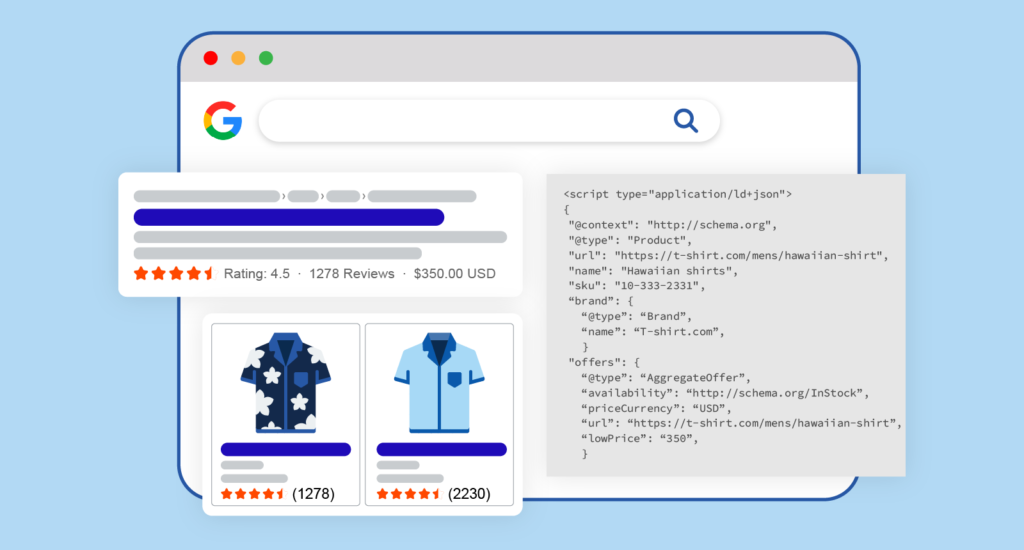
Implementation Best Practices
Use JSON-LD Format (Google’s standard)
Why: Easier to maintain, Google prefers it, separates data from HTML.
<script type="application/ld+json">
{
  "@context": "https://schema.org/",
  "@type": "Product",
  "name": "ASICS Gel-Kayano 30",
  ...
}
</script>
Validate Before Publishing:
- Google Rich Results Test
- Schema.org Validator
- Microdata testing tools
- Monitor in Google Search Console (Rich Results report)
Align Schema with Visible Content:
- Schema price = actual price on page
- Schema availability = actual inventory status
- Schema rating = visible star count
- Google penalizes misleading markup (wrong data = disapproval + removal)
Update Dynamically:
- Real-time pricing (if price changes, schema updates automatically)
- Inventory sync (if product out of stock, schema shows OutOfStock)
- Review updates (new reviews automatically update aggregateRating)
- Availability status (preorder, limited availability, discontinued)
Use server-side rendering or APIs to keep schema always accurate.
Google’s Product snippet structured data guide emphasizes that schema markup must always reflect actual page content—misleading markup results in manual actions and removal from rich results. Use Google’s Rich Results Test and the Search Console Rich Results report to validate implementation and monitor for errors.
Part 10: Link Building & Authority – Earning Backlinks
Links are votes of confidence. A high-quality backlink from Runner’s World saying “Best Running Shoes 2026” counts as a third-party endorsement.
Ecommerce link building is different from content marketing. Product pages rarely earn links naturally. Authority comes from your content hub (buying guides, research) and brand recognition.

Why Ecommerce Link Building is Different
Product pages don’t attract links naturally. A specific product page is rarely interesting enough for other websites to link to.
Example:
- “10 Best Running Shoes 2026” (linkable)
- “ASICS Gel-Kayano 30 Product Review” (less linkable, more competitive)
Strategy: Build authority through linkable assets, then let the products benefit from domain authority.
High-Impact Ecommerce Link Building Strategies
1. Digital PR & Media Coverage (Highest Impact)
Create newsworthy content, pitch to relevant publications and journalists.
Examples:
- Original research: “2026 Running Shoe Market Study: 5,000 Runners Surveyed”
- Industry trend: “Marathon Training Shoe Evolution: 20 Years of Innovation”
- Brand story: “From Garage to €10M: How EshopSEO Disrupted Running Shoes”
- Celebrity endorsement or partnership
- Award or recognition
Pitch to:
- Runner’s World, Trail Runner Magazine, FastCompany
- Fitness/lifestyle publications
- Business publications (if B2B angle)
- Podcasts and YouTube channels
Expected outcome: 1 media placement = 5-20 quality backlinks + massive brand awareness.
2. Niche Authority Guest Posting
Write articles for established blogs in your industry.
Target:
- Blogs with 50+ Domain Authority
- 10,000+ monthly visitors
- Relevant audience (runners, fitness enthusiasts, etc.)
Article ideas:
- “5 Running Shoe Features That Actually Matter (Not Marketing Hype)”
- “How to Choose Running Shoes for Your Running Style”
- “Runner’s Guide to Shoe Maintenance: Make Your Shoes Last Longer”
Include: 1-2 natural links to your site within the article.
Expected outcome: 1 guest post = 1-3 quality backlinks + referral traffic + audience exposure.
3. Linkable Assets
Create unique content competitors can’t easily replicate, making other sites want to link to you.
Examples:
- Comprehensive comparison: “Complete Guide: 50 Running Shoes Compared” (detailed comparison table, pros/cons for each)
- Original research: Survey 5,000+ runners, publish findings
- Interactive tool: Running shoe finder quiz (users love linking to interactive tools)
- Video content: High-quality product reviews or training guides
- Infographic: “Running Shoe Evolution,” “Running Metrics Explained”
Expected outcome: 1 linkable asset = 20-50 natural backlinks over time as it gets shared and referenced.
4. User-Generated Content
Encourage customers to create content (reviews, videos, photos).
Incentive:
- Feature content on your site (free promotion for user)
- Reward program (discount, free product)
- Contest (best review wins €100)
YouTube creators often link to products they review.
Instagram influencers mention products in posts.
Unboxing videos drive discovery.
Expected outcome: 10 customers creating content = 50+ backlinks from their audiences.
5. Competitor Link Analysis
Identify where competitors get links, then pursue those same opportunities.
Tools: Ahrefs, SEMrush, Moz (see where your competitors link from).
Process:
- Identify 3-5 direct competitors
- Export their backlink profiles
- Sort by authority (Domain Rating, Citation Flow)
- Identify high-authority sources linking to them
- Reach out to those sources with your own angle
Expected outcome: 1 competitor linking from publication = you can likely pitch similar story and earn link.
6. Broken Link Replacement
Find broken links to competitor products, replace with your product.
Process:
- Identify content linking to competitor: “Best Running Shoes 2025 [links to competitor]”
- Find the broken link (still exists but target page moved/deleted)
- Contact content owner: “I noticed your link to [old product] is broken. I have a better alternative at [your site]”
Expected outcome: 20% success rate = 1 link per 5 outreach attempts.
7. Industry Partnerships & Sponsorships
Partner with complementary brands, sponsor relevant events or publications.
Examples:
- Marathon sponsorship (booth, branded gear)
- Running podcast sponsorship
- Fitness influencer partnership (send free products for review)
- Charity run sponsorship (get mentioned in press release)
Expected outcome: 1 partnership = 2-5 backlinks + brand exposure.
Resources like Moz’s link building guides provide foundational strategies for earning authoritative backlinks, but ecommerce link building requires content assets that naturally attract links. Instead of just product pages, create data-driven research, comprehensive comparison guides, or interactive tools. EshopSEO can help generate these linkable assets—comprehensive buying guides, category comparison articles, and EEAT-rich content that other sites will naturally want to reference and link to as authoritative resources in your niche.
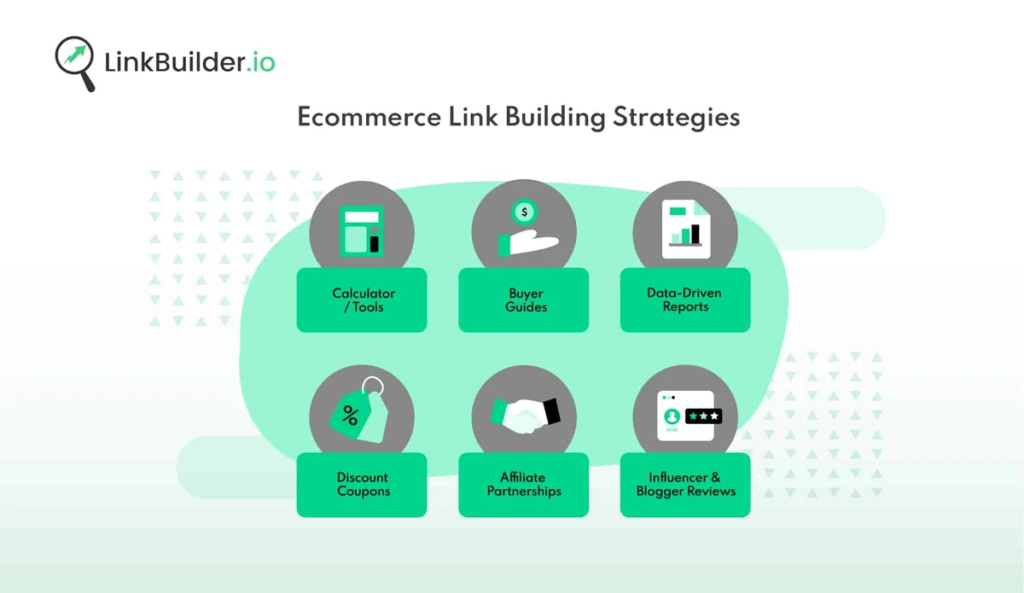
Link Building Frequency & Velocity
Avoid unnatural spikes.
Google watches link velocity (growth rate). A site that gets 5 links one month then 50 the next looks manipulative.
Ideal approach:
- Month 1-2: 5-10 links/month (establish baseline)
- Month 3-6: 15-20 links/month (steady growth)
- Month 7-12: 20-30 links/month (sustainable growth)
- Year 2+: 30-40 links/month (mature link profile)
Never:
- Jump from 5 to 50 links in one month (red flag)
- Get 100+ low-quality links quickly (PBN links, link schemes)
- Buy links or link services (violates Google guidelines)
Part 11: Mobile Optimization & Voice Search – The 2026 Essentials
75%+ of ecommerce searches are mobile. Google crawls mobile-first. Voice commerce is the fastest-growing channel.
Mobile optimization isn’t optional—it’s your primary ranking signal.
Mobile-First is Non-Negotiable
Why it matters:
- Mobile traffic exceeds desktop
- Google indexes mobile version (mobile-first indexing)
- Mobile Core Web Vitals stricter than desktop
- Mobile checkout experience directly impacts conversion
Mobile Ecommerce Optimization:
1. Page Speed (Target: <2 seconds on 4G)
Mobile users on 4G are impatient. Every 100ms of delay costs 1-2% in conversions.
Optimizations:
- Edge computing (CDN edge nodes serve content fast)
- Image optimization (50% of page weight is usually images)
- Lazy loading (load off-screen images on scroll)
- Code splitting (load only code needed for page)
- Defer non-critical JavaScript
- Enable compression (GZIP, Brotli)
2. Touch Optimization
Touch targets need to be bigger than cursor clicks.
- Minimum 48×48 pixels for buttons, links, form inputs
- Finger-friendly spacing (not cramped)
- Enough space between interactive elements (user doesn’t accidentally click wrong button)
3. Simplified Navigation
Mobile screens are small. Simplify navigation:
- Hamburger menu for secondary options
- Sticky navigation bar (always accessible)
- Sticky search bar
- Breadcrumbs (help users navigate)
- Collapsible filters (don’t take screen space)
4. One-Page or Progressive Checkout
Desktop checkouts with 5+ pages on mobile cause cart abandonment.
- Page 1: Shipping address
- Page 2: Shipping method
- Page 3: Payment
This 3-step flow should complete in <3 seconds each step.
Better: Progressive checkout where steps load inline without page reloads.
5. Payment Options
- Apple Pay (15-30 seconds to checkout on iPhone)
- Google Pay (15-30 seconds on Android)
- PayPal (40-50 seconds)
- Credit card (60-90 seconds)
Users with Apple/Google Pay check out 40% faster.
6. Product Images for Mobile
- Multiple angles (mobile users see smaller images)
- Zoom functionality (let users see details)
- Image carousel (swipe between images)
- Video preview (show product in action)
- High contrast (visible even in bright sunlight)
7. Form Optimization
- Autofill enabled (autocomplete=”given-name”, etc.)
- Correct input types (tel, email, number = mobile keyboards)
- Minimal fields (ask only essential info)
- Clear error messages (show exactly what went wrong)
- Progress indicator (show how many steps remain)
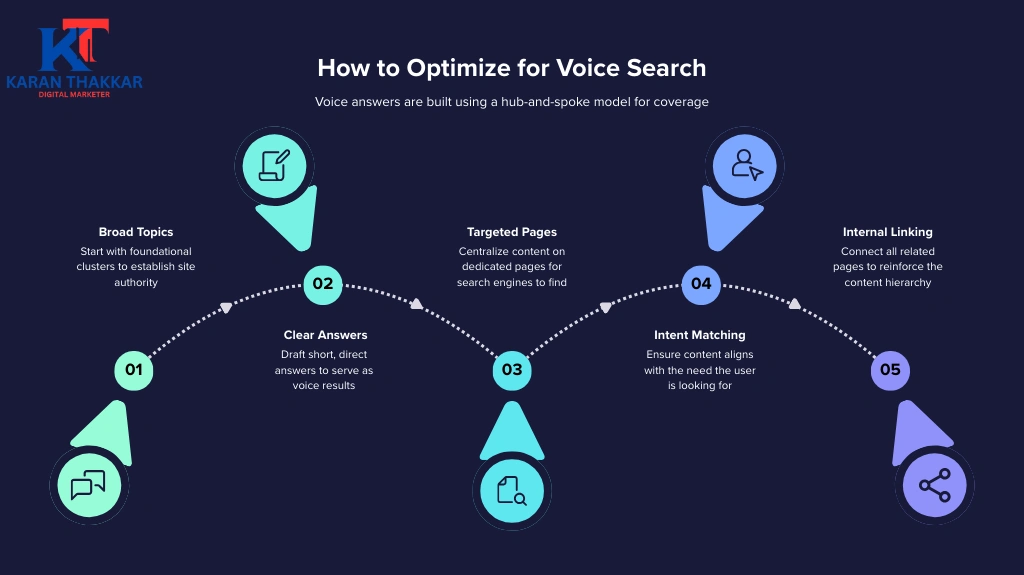
Voice Search & Conversational SEO
Voice commerce is exploding. Users ask:
- “Show me black running shoes under €100 with good reviews”
- “Which running shoes are best for marathons?”
- “Where can I buy ASICS running shoes nearby?”
Voice queries are:
- Conversational (7-10 words vs. 2-3 for typed search)
- Question-based (“How to,” “What is,” “Best”)
- Intent-specific (often ready to buy, not just browsing)
- Local (“Near me,” “Local,” “Close by”)
Optimizing for Voice:
1. Conversational Keywords
Map long-tail, question-based keywords.
Tools: AnswerThePublic, Google People Also Ask, Google Trends
Examples:
- “What are the best running shoes for flat feet?”
- “Which running shoes should I get for marathon training?”
- “Where can I buy ASICS running shoes in my size nearby?”
- “How much should I spend on running shoes?”
- “Do I need expensive running shoes or are cheap ones okay?”
2. FAQ Optimization
Voice assistants prioritize Q&A content.
Implement FAQ schema so voice engines reliably extract answers.
Each question should be phrased naturally (how users ask it):
- ✅ “What makes a good running shoe?”
- ❌ “Running shoe quality characteristics”
Answers should be conversational (40-50 words ideal for voice):
- ✅ “A good running shoe provides arch support for your foot type, comfortable cushioning that doesn’t feel mushy, and durability for at least 500 miles of running. You should also consider your specific running style—whether you need stability support or minimal cushioning.”
- ❌ “Arch support, cushioning, durability.”
3. Local SEO
Voice searches frequently include “near me” or location names.
Optimize Google Business Profile:
- Accurate address, phone, hours
- Categories filled out (Shoe store, Sports retailer)
- High-quality photos and logo
- Recent customer reviews and Q&A
Local schema markup:
{
  "@type": "LocalBusiness",
  "name": "EshopSEO Store",
  "address": {
    "@type": "PostalAddress",
    "addressLocality": "Athens",
    "addressRegion": "Attica",
    "postalCode": "10000",
    "streetAddress": "123 Main Street"
  },
  "telephone": "+30-2107-777-777",
  "url": "https://example.com"
}
4. Featured Snippet Targeting
Voice assistants often read featured snippets.
Structure content for snippet success:
- Direct answer (first 40-50 words)
- Q&A format
- Lists and tables
- Clear, scannable format
Part 12: Implementation Roadmap – From Planning to Results
Ecommerce SEO takes time. Quarterly cycles (90 days) create sustainable progress while allowing for adjustments.
The 90-Day Quarterly Approach
Q1: Audit & Foundation (Months 1-3)
Weeks 1-2: Comprehensive SEO Audit
- [ ] Technical audit: Core Web Vitals, crawlability, indexation
- [ ] Content audit: Keyword rankings, content gaps, duplicate content
- [ ] Competitive analysis: Where do competitors get traffic/links?
- [ ] Backlink profile review: Current link count, quality, anchor text
- [ ] Current ranking positions: Which keywords rank top 3, 10, 50?
Weeks 3-4: Technical Quick Wins
- [ ] Fix Core Web Vitals: LCP optimization, CLS fixes, INP improvements
- [ ] Fix indexation problems: Noindex wrong pages, redirect duplicates
- [ ] Fix broken redirects and 404s
- [ ] Enable GZIP compression, browser caching
- [ ] Optimize database queries, server response time
Weeks 5-8: On-Page Optimization (Priority Pages)
- [ ] Optimize top 30 product pages:
- Title, meta description
- Product images (5+, optimized)
- Product description (unique, semantic depth)
- FAQ section (5-8 questions)
- Product schema implementation
- [ ] Optimize top 10 category pages:
- Intro paragraph (150-200 words)
- H1, H2 structure
- Product listing organization
- Internal linking
- [ ] Implement complete Product schema across all products
- [ ] Fix canonicalization issues
- [ ] Improve image alt text
Weeks 9-12: Setup & Monitoring
- [ ] Google Search Console alerts configured
- [ ] Rank tracking tool set up (track 50 target keywords)
- [ ] Google Analytics 4 configured (ecommerce events)
- [ ] Conversion tracking implemented
- [ ] Document baseline metrics (traffic, rankings, conversions)
Q1 Success Metrics:
- Core Web Vitals in “Good” range
- 20-30 product pages fully optimized with schema
- Baseline rankings documented
- Technical foundation solid (no 404s, crawl errors, etc.)
Q2: Content & Authority (Months 4-6)
Weeks 1-6: Content Expansion
- [ ] Publish 8-12 buying guides / category guides
- [ ] Optimize remaining category pages (add FAQ, comparisons, guides)
- [ ] Create FAQ sections for top 20 product pages
- [ ] Publish seasonal/trending content
- [ ] Create first linkable asset (research, interactive tool, guide)
Weeks 7-12: Link Building Campaign
- [ ] Guest post on 3-4 niche authority sites (Runner’s World, fitness blogs)
- [ ] Pitch media coverage for brand/product (1-2 PR placements)
- [ ] Start broken link replacement (2-3 per month)
- [ ] Build partnerships with complementary brands
- [ ] Respond to brand mentions without links (build relationship)
Q2 Success Metrics:
- 8-12 new buying guides published and indexing well
- 3-4 guest posts + backlinks earned
- 50% of product pages with FAQ schema
- 20-30 new backlinks acquired
- Top keywords ranking in 4-10 range (pushing toward top 3)
Q3: Optimization & Scale (Months 7-9)
Product Page Expansion:
- [ ] Optimize next batch of 50 product pages (schema, FAQs, images)
- [ ] Implement AEO best practices (better schema, comparison content)
- [ ] Add post-purchase content (care guides, troubleshooting FAQs)
- [ ] Improve product review integration (verified buyer badges)
Category Page Expansion:
- [ ] Optimize next batch of category pages
- [ ] Create buying guide content for each top category
- [ ] Implement comparison content (vs. competitors)
- [ ] Add FilteredSearch schema
Backlink Building:
- [ ] Continue guest posting (3-4 pieces/quarter)
- [ ] Expand linkable asset promotion (outreach to 50+ sites)
- [ ] Build 2-3 strategic partnerships
- [ ] Run one digital PR campaign (news hook, press release)
SEO Refinement:
- [ ] Analyze Q1-Q2 data: Which pages/keywords moved?
- [ ] Double down on what’s working (more content in successful categories)
- [ ] A/B test meta descriptions, CTAs
- [ ] Fix underperforming pages (improve or consolidate)
Q3 Success Metrics:
- 100+ product pages fully optimized
- 8-10 new buying guides published
- 20-30 keyword positions improved 1+ spots
- 40-50 new backlinks acquired
- Traffic up 15-25% vs. Q1 baseline
Q4: Results & Scale (Months 10-12)
Focus on ROI:
- [ ] Increase organic conversion rate:
- Improve product page CTAs
- Optimize checkout experience
- Test price positioning
- Increase trust signals
- [ ] Scale top-performing content:
- Identify which categories drive revenue
- Expand product selection in winning categories
- Double content investment in profitable areas
- [ ] Expand to related keywords/categories:
- Identify keyword gaps
- Publish content for high-opportunity niches
- Capture adjacent search intent
Brand Authority:
- [ ] Finalize year-end content
- [ ] Build brand mentions and PR
- [ ] Sponsor relevant events or publications
- [ ] Build influencer relationships
Planning for Year 2:
- [ ] Set aggressive but realistic goals:
- Organic traffic: +30-50%
- Revenue: +25-40%
- Keyword rankings: 50+ top 3, 150+ top 10
- [ ] Plan major content initiatives
- [ ] Budget for tools, freelancers, agencies
- [ ] Identify new category opportunities
Q4 Success Metrics:
- Organic traffic up 40-60% vs. Year 1 baseline
- Organic revenue up 25-35% vs. Year 1
- 50+ keywords in top 3
- 150+ keywords in top 10
- Average ranking position improved 5+ spots
Implementation Checklist (First 90 Days)
Week 1
- [ ] Complete technical SEO audit (use Screaming Frog, Google Search Console)
- [ ] Identify top 30 priority product pages (highest search volume + traffic)
- [ ] Identify top 10 priority category pages (highest commercial intent)
- [ ] Set up rank tracking for 50 target keywords (use SE Ranking or Semrush)
- [ ] Set up GA4 event tracking for ecommerce (add_to_cart, purchase events)
Week 2-3
- [ ] Fix critical technical issues:
- Core Web Vitals below Good threshold
- Crawl errors (404s, blocked resources)
- Indexation problems (noindex overuse)
- [ ] Implement Product schema on all product pages
- [ ] Optimize priority product page titles and meta descriptions (50-60 chars)
Week 4-6
- [ ] Add high-quality product images (5+ per product, optimized <150KB each)
- [ ] Write/improve product descriptions (unique, benefit-focused, 200-300 words)
- [ ] Implement FAQ schema on top 10 product pages
- [ ] Improve category page structure and content
Week 7-8
- [ ] Create 2-3 buying guide pieces (1,500 words each)
- [ ] Implement internal linking strategy (homepage → categories → products)
- [ ] Set up breadcrumb schema on all pages
- [ ] Fix duplicate content issues (canonicals, redirects)
Week 9-10
- [ ] Start first link-building campaign (identify 20 guest post opportunities)
- [ ] Create first linkable asset (guide, tool, research)
- [ ] Implement review schema and collection reviews
- [ ] Set up metrics dashboard (track rankings, traffic, conversions)
Week 11-12
- [ ] Analyze early results and adjust strategy
- [ ] Document lessons learned
- [ ] Plan Q2 priorities (buying guides, content, links)
- [ ] Present ROI to stakeholders
Tools & Resources
Technical Auditing & Monitoring:
- Google Search Console (free, essential for indexation and technical issues)
- Google PageSpeed Insights (free, Core Web Vitals testing)
- Screaming Frog SEO Spider (comprehensive crawling and technical audits)
- WebPageTest (detailed performance analysis)
Unified Search Intelligence:
- AdCoon.ai (unified SEO, PPC, Shopping, and AEO visibility tracking in one platform)
- Semrush (comprehensive keyword research and competitor analysis)
- Ahrefs (backlink analysis and content gap identification)
Content Creation & Scaling:
- EshopSEO (AI-powered, EEAT-compliant ecommerce content generation with product-aware internal linking)
- AnswerThePublic (question-based keyword research)
- Google Trends (seasonality and demand trending)
Schema & Structured Data:
- Google Rich Results Test (validate structured data implementation)
- Google’s Product Structured Data Documentation (official specifications)
- Schema.org Validator (comprehensive schema validation)
Education & Best Practices:
- Google Search Central Ecommerce SEO Guidelines (official Google recommendations)
- Moz’s Beginner’s Guide to SEO (foundational SEO education)
- Google Merchant Center Help (Shopping and feed optimization)
Analytics:
- Google Analytics 4 (ecommerce tracking and conversion analysis)
- Google Tag Manager (event tracking implementation)
- Merchant Center (for Google Shopping data)
Conclusion: Your 2026 Ecommerce SEO Roadmap
Key Takeaways
- EEAT is the foundation – Build expertise, authority, and trust signals across all pages. Reviews, testimonials, clear policies, and security matter more than keywords.
- Technical excellence is non-negotiable – Core Web Vitals, mobile optimization, crawlability, and structured data aren’t optional extras. They determine whether you rank at all.
- Semantic depth matters more than keywords – Cover topics comprehensively, build topical authority through cluster content, use natural language. One well-researched page beats 10 thin pages.
- AEO is not optional – Structure your product data completely. AI answer engines are now your biggest competitor. Clear, extractable information gives you a competitive advantage.
- Product + Category pages are your revenue engine – Invest 70% of your optimization effort in these high-conversion pages. Support pages (guides, FAQs) link to them and drive relevance.
- Internal linking distributes power – Smart site architecture helps both users and search engines. Breadcrumbs, navigation, and contextual linking pass authority to your revenue pages.
- Authority takes time – Build backlinks consistently, focus on quality over quantity. Expect 6-12 months before seeing major organic growth, but rewards compound significantly.
- Mobile and voice are essential – 75%+ of searches are mobile. Optimize for fast loading, touch usability, and conversational queries. Voice commerce is growing 400%+ year-over-year.
- Quarterly planning creates momentum – 90-day cycles allow for meaningful progress, testing, and adjustments. Month 1-3 focus on foundation, months 4-6 on content and authority, months 7-9 on scaling, months 10-12 on results.
- Measurement drives decisions – Track what matters: rankings, traffic, conversions, revenue. Use data to identify what’s working and double down. Cut what doesn’t.
Next Steps
This Week:
- Conduct comprehensive technical SEO audit
- Identify top 30 product pages and top 10 category pages
- Set up rank tracking for 50 target keywords
- Document baseline metrics (traffic, rankings, conversions)
This Month:
- Fix Core Web Vitals issues (LCP, CLS, INP)
- Implement Product schema on all product pages
- Optimize priority product page titles, descriptions, images
- Publish first buying guide
This Quarter (90 Days):
- Complete technical foundation (no crawl errors, schema implemented)
- Optimize top 30 product pages + top 10 category pages
- Publish 8-12 buying guides and content pieces
- Earn 20-30 new backlinks through guest posting and PR
This Year:
- Implement full AEO strategy (complete schema, FAQ sections, comparison content)
- Build topical authority (cluster content around main categories)
- Earn 100+ quality backlinks through digital PR and partnerships
- Grow organic traffic 40-60%, organic revenue 25-35%
The Bottom Line
Ecommerce SEO in 2026 is about building a comprehensive system:
- Technical foundation so Google can find and trust your site
- Content authority so users and AI engines choose you over competitors
- User trust signals (reviews, security, clarity) that convert browsers to buyers
- Link authority that establishes you as an industry leader
This guide provides the framework. The execution determines your success. Start with the technical audit this week. Move to content optimization next. Build authority over the next quarter. Scale in the second half of the year.
Ecommerce SEO in 2026 requires mastery of traditional optimization, modern AEO strategies, and structured data implementation—all grounded in Google’s official ecommerce SEO best practices. The winning approach combines technical excellence (Core Web Vitals, mobile optimization, schema markup) with EEAT-driven content authority and comprehensive search visibility tracking.
To execute this strategy efficiently, successful ecommerce teams are leveraging specialized tools: EshopSEO for scaling EEAT-compliant, product-aware content with automatic internal linking; AdCoon.ai for unified visibility tracking across SEO, PPC, Shopping, and AI answer engines; and Google’s native tools like Search Console and Merchant Center for technical diagnostics and feed management.
Start with the 90-day roadmap outlined in this guide. Audit your technical foundation using Google’s PageSpeed Insights. Implement complete Product schema following Google’s structured data guidelines. Build topical authority through comprehensive content clusters. And continuously monitor, measure, and optimize based on data.
The stores that dominate ecommerce search in 2026 won’t be the ones with the biggest budgets—they’ll be the ones that execute systematically, leverage the right tools, and consistently deliver the high-quality, structured, trustworthy experiences that both Google’s algorithms and AI answer engines prioritize. Your competitive advantage starts with the decisions you make today.